How to Use a Lem Vibrator When You Feel Self-Conscious About Pleasure
Shame around your own body's pleasure is learned. Here's how to unlearn it, one session at a time, with a tool designed to help you feel good without apology.
Here's what I hear in my office more than almost anything else: "I feel weird touching myself." Or: "I feel guilty when I use a vibrator." Or the quieter version: "I know I should enjoy this, but I can't turn off the voice in my head that says it's wrong."
That voice isn't your conscience. It's conditioning. And it's blocking you from something you deserve.
Self-consciousness around pleasure is not a character flaw. It's a symptom of living in a culture that taught you, early and often, that your pleasure matters less than your appearance, your availability, your niceness. A culture that framed masturbation as a consolation prize, not as a legitimate form of sexual expression. A culture that, for women especially, bundled shame so tightly with sex that the two feel inseparable.
The good news: this is fixable. And a lemon clitoral vibrator like the Lem can actually be the tool that helps you rewire your nervous system. Not through willpower or positive thinking. Through simple, repeated experiences of pleasure without punishment.
Your brain can't be in two places at once. It can't be present in your body and simultaneously narrating your body from the outside. That split attention is not a bug in how pleasure works. It's the whole system backfiring.
When you're self-conscious, your nervous system is in a low-grade state of threat. You're braced. You're watching yourself rather than feeling yourself. And your body responds to that threat by becoming less responsive. Blood flow decreases. Lubrication slows. Arousal stalls. Then you interpret the stalling as evidence that something is wrong with you, and the shame spiral tightens.
This is exactly backward. The problem isn't your capacity for pleasure. It's the mental commentary preventing your body from accessing what's already there.
Sexual shame has layers, and they're worth naming. The first layer is often religious or family-based. You absorbed the message, usually pre-verbally, that your body's desires were dangerous or dirty. You learned to split from your own sensations. The second layer is social: watching how friends, media, and culture treat women's sexuality. The third layer is relational: maybe a partner made a comment that landed like a wound, or an ex made you feel watched in a way that never left.
All of these layers live in your nervous system, not just in your thoughts. So shame isn't something you can think your way out of. You have to feel your way through it.
That's where tools matter. A lemon vibrator removes some of the mental load. It's not your fingers, which might carry the weight of "I'm doing this to myself." It's external, boundaried, and designed specifically to help. Using one is a way of saying to your nervous system: "This is allowed. This is mine. This is good."
Barrier one: the eye contact problem. Many people feel weirdly seen using a vibrator, even alone. If that's you, start with your eyes closed. Close them deliberately. Not as avoidance, but as a choice. You're choosing where your attention goes. That's power.
Barrier two: the sound. The Lem is quiet, but some people find even quiet noise destabilizing. If you live with others and sound triggers self-consciousness, try headphones or music. White noise. A locked door and permission to yourself that what you do behind that door is not up for negotiation.
Barrier three: the timeline pressure. Shame often comes with a sub-current of "I should be done by now." So you rush. Set a timer if that helps. Give yourself 20 minutes minimum. Know that the first five are often about just being alone with yourself. The pleasure comes after the settling.
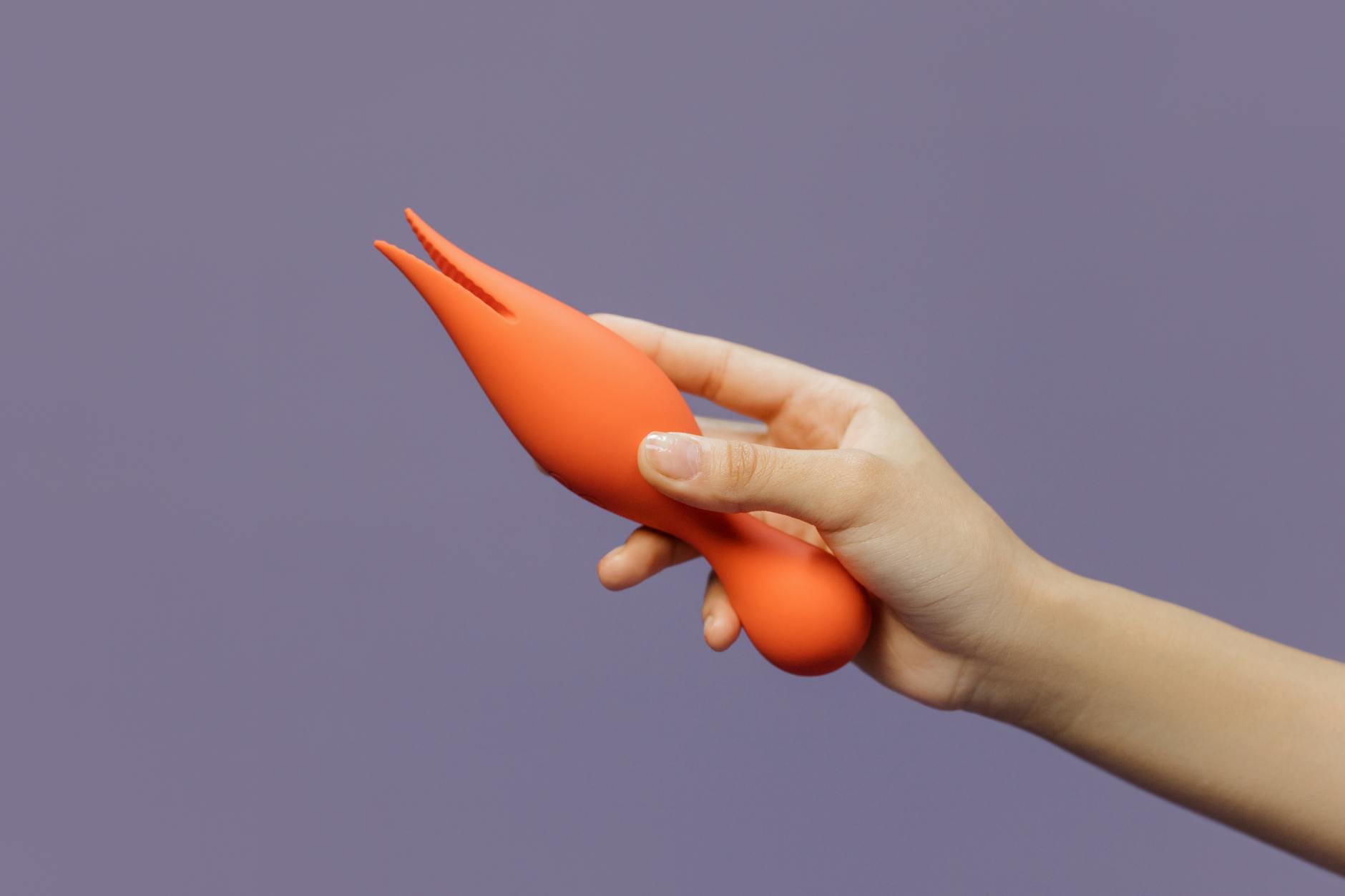
Start by touching the outside of the Lem. Not using it. Just holding it. Feel the weight. The shape. The temperature. This is a grounding exercise. It anchors you in physical sensation instead of in your own narrative.
Then turn it on at the lowest setting. Not on your clitoris yet. On your thigh. Or your inner arm. The point is to get your nervous system familiar with the sensation without the stakes of direct clitoral stimulation. This is permission to be clumsy. To take your time. To not have to perform.
When you do move it to your clitoris, use a lighter pressure than feels intuitive. The suction-based design of the Lem means you don't need much. Start with just the outer edge. If you feel a thought rising ("This is weird" or "I shouldn't want this"), name it and release it. Not by fighting it. By acknowledging it and returning to the physical sensation. That's not thought-stopping. That's thought management.
A note on lubrication: dryness often pairs with shame because shame constricts everything, including your body's natural responses. Water-based lube is your friend here. It's not cheating. It's honoring your body's actual experience rather than forcing it to perform.
One session won't rewire you. But ten will start to. Fifty will change you. The cumulative effect of choosing your own pleasure, again and again, is that your nervous system slowly stops treating it as dangerous.
Each time you do this, you're laying down a new neural pathway. You're proving to your body that pleasure is safe. That you're allowed. That no one is watching. That this is yours.
Many people find that the first orgasm using a lemon vibrator when they're carrying shame is weird or subdued. That's normal. You're still partially braced. But the second and third tend to be deeper. By the seventh or eighth time, something shifts. The shame voice gets quieter. Your body gets louder.
Start with once a week if that feels manageable. Permission is the highest-order element here. If you're borrowing shame-based narratives about "frequency" or "addiction," examine those. Masturbation is not a moral issue. It's hygiene for your nervous system.
Here's the thing that trips people up: sometimes self-consciousness about pleasure isn't actually about pleasure. It's about control. Or about what you think it means about you as a partner. Or about feeling like you don't deserve good things.
If you find that shame persists even after repeated, positive experiences with your Lem, it might be worth talking to a therapist. Not because something is wrong with you. But because sometimes we carry stories about ourselves that run so deep they need more than a vibrator to shift. A therapist trained in sex-positive modalities can help you identify where the real knot is.
The relationship between shame and pleasure is complex. A lemon clitoral vibrator is a tool. A really good one. But it's not a magic wand. It's an invitation.
Is it normal to feel awkward using a vibrator by myself?
Completely. Most people do initially, especially if they grew up in environments where solo sex was framed as wrong or weird. Awkwardness is just unfamiliarity. It dissolves with repetition and permission. The Lem's design actually helps here because the external tool gives you permission your own hand might not.
Will using a lemon vibrator make me dependent on it for orgasm?
No. This is a common fear rooted in shame about pleasure. Your clitoris doesn't "forget" how to respond to other stimulation. In fact, most people find that using a vibrator actually heightens sensitivity in other contexts because they've practiced feeling good. Pleasure begets pleasure.
How long should it take to orgasm with a lemon clitoral vibrator?
There's no right timeline. The first few times, it might take 15 or 20 minutes as your nervous system settles. Over time, it usually gets faster as your body learns to drop into the sensation. But slower isn't worse. Treat this as time for yourself, not as a task to complete.
What if I can't focus when I'm alone with myself?
Your mind might wander. That's not failure. That's what happens when we finally stop and sit with ourselves. Try anchoring with sound: a playlist, an audiobook (yes, really), binaural beats. Or try focusing on your breath. The goal is gentle presence, not perfect meditation.
Can I use a lemon sucker vibrator if I'm with a partner but feel self-conscious?
Absolutely. And your partner using it on you can sometimes feel less vulnerable than self-pleasure because you're not fully directing the experience. Some people find that path easier. How to use a lemon vibrator with partners who want different intensities walks through navigation with a partner in the room.
How does shame around pleasure connect to numbed sensation?
Direct connection. Shame causes you to dissociate from sensation as a protection mechanism. Over time, dissociation becomes habit. Your body stops sending signals because you've trained it that those signals aren't safe. Rewiring that takes time, but reclaiming pleasure is actually how you restore feeling. How to rebuild clitoral sensation after years of numbness digs deeper into the neurobiology here.
Your body deserves pleasure. Not as a reward for being good, not as something you earn, not as a transaction in a relationship. As a baseline human right. The voice in your head that says otherwise was installed by people who profited from you being small. That voice is not your truth.
A lemon vibrator won't silence that voice on its own. But using one, again and again, in a way that's gentle and permission-filled, teaches your nervous system something radical: that your pleasure matters. That you matter. That you get to have this.
Start small. Start alone. Start with permission. The rest builds from there.
If you're ready to begin or to go deeper into the relationship between shame and sensation, I'm here. Reach out, or explore what works for your body with no pressure and no timeline.