The mismatch nobody talks about
One partner reaches for the highest setting. The other winces. This isn't a small problem. Intensity preference is one of the fastest ways couples find themselves avoiding touch altogether, because someone always ends up uncomfortable, frustrated, or feeling unseen.
Here's what makes it thorny. Intensity isn't about one person being "more into it" than the other. It's physiology meeting psychology meeting history. One person might have less nerve sensitivity. Another might carry tension in their pelvic floor that makes strong sensation feel like pain. A third person might associate gentleness with connection and power with anxiety.
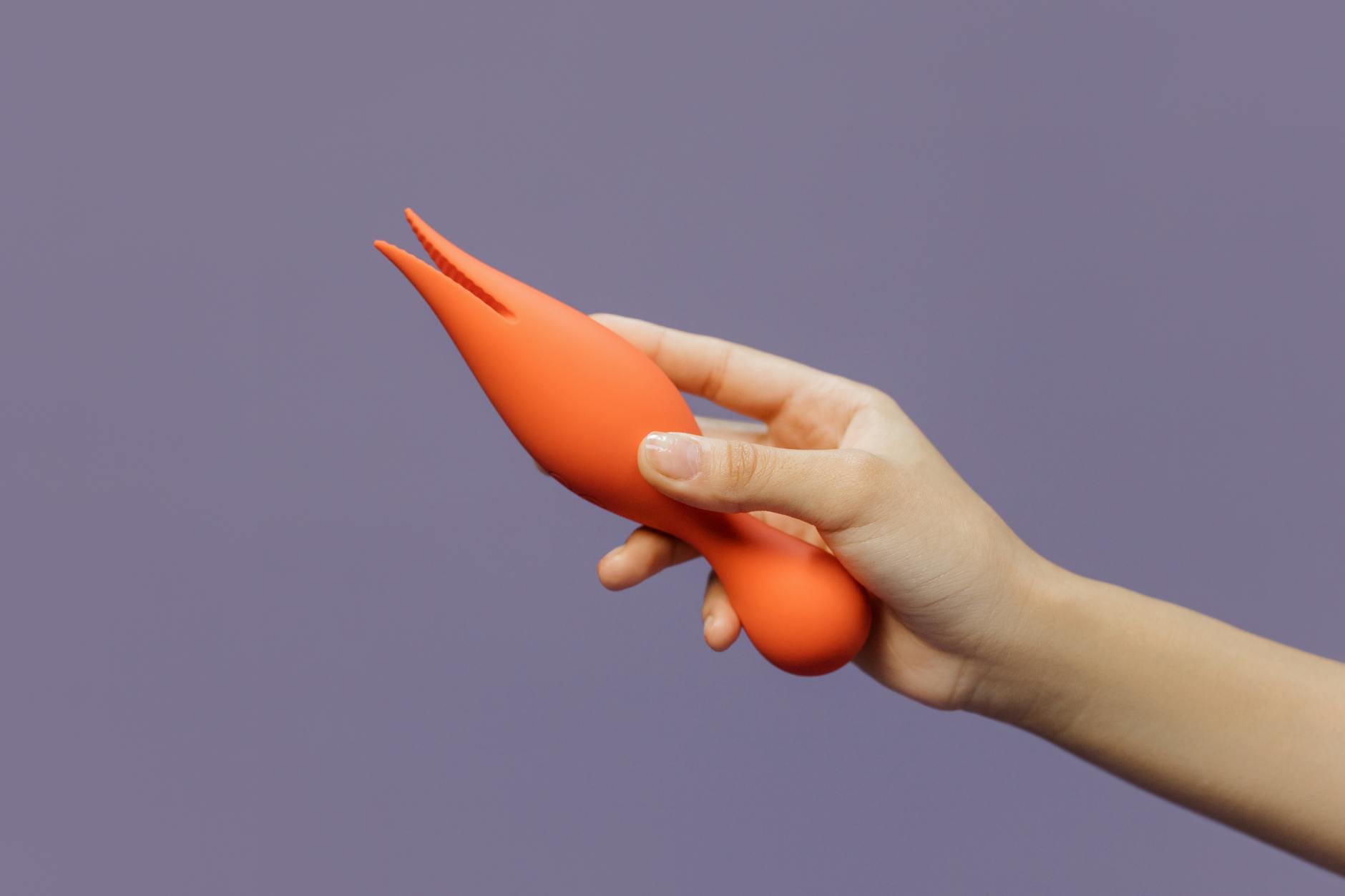
I've sat with hundreds of couples on this exact friction point. The good news? A lemon clitoral vibrator, with its range of settings and precision control, is genuinely one of the best tools for bridging this gap.
Why intensity mismatches happen in the first place
Three separate systems are at play here, and they rarely sync up perfectly.
Neurological sensitivity. Some people are born with denser nerve clusters. Others have fewer. This isn't preference. It's anatomy. A partner with lower nerve density might need stronger stimulation to register sensation at all. Their partner, with higher sensitivity, could find that same setting overwhelming.
Pelvic floor tension. Stress, past pain, anxiety about being touched, or even years of holding tension in the pelvis changes how sensation feels. A tight pelvic floor filters vibration differently than a relaxed one. I often see partners where one person's "normal" intensity triggers the other's protective muscle clench.
Pleasure language and history. Some people learned to associate pleasure with intensity, speed, and power. Others learned to find pleasure in subtlety, patience, and nuance. Neither is better. But they're wildly different, and they often collide in long-term partnerships.
The conversation that needs to happen first
Before you ever touch the vibrator together, name the actual pattern.
Instead of "You always want it too strong" or "You're too sensitive," try this framework. Sit down when you're not trying to be intimate. Say something like: "I've noticed we like different intensities, and I want to figure this out together so we both feel good. Can we talk about what intensity actually feels like to you?"
Then listen for the real answer. Is it uncomfortable? Is it numbing? Does it feel disconnected? Does it hurt? Does it feel boring? All of those sound similar from the outside but need completely different solutions.
If intensity feels too strong: They might need longer warm-up time, lower starting settings, or transition to gentler patterns before ramping up.
If intensity feels too weak: They might need to address pelvic floor tension first, explore whether sensitivity has genuinely dropped, or try a different vibration pattern entirely.
If intensity feels disconnected: They might need more foreplay, more eye contact, or a completely different tool that engages sensation differently.
The conversation isn't about fixing someone. It's about gathering data.
Why a lemon vibrator works for mismatched couples
The Lem vibrator offers something most couples toys don't: genuine granularity across the intensity spectrum.
The suction mechanism starts at pattern 1, which is genuinely subtle. I'm not being polite here. Pattern 1 is low enough that partners who usually avoid vibrators altogether often find it manageable. Then you can climb gradually through patterns 2, 3, 4, 5, and beyond. That slow climb matters for couples because it creates a zone where both people can meet.
Unlike a standard vibrator with three settings (off, medium, jackhammer), the lemon clitoral vibrator lets you start so gently that a sensitive partner doesn't feel invaded, while the patterns and intensities still satisfy someone who needs stronger stimulation.
Beyond intensity, suction works differently than direct vibration. Some people find suction less overwhelming than vibration, even at higher settings. That's worth knowing. A partner who can't handle strong vibration sometimes feels completely different about suction at the same power level.
The practical system: how to use it together
Start with a non-negotiable agreement: you'll both agree on where to start, and you'll both have a real way to change course if it's not working.
Step 1: Set a baseline together. Before any touch, you each independently try the lem vibrator on your own. Your partner on pattern 3. You on pattern 1. Spend five minutes alone with it. Then come back and tell each other what you felt.
This sounds silly. It's not. You learn three crucial things: what the physical sensation actually is (not imagination), where you each land on the comfort scale, and whether you're even talking about the same thing.
Step 2: Agree on a starting intensity before you begin. Not during. Before. I recommend starting one setting lower than whoever has lower sensitivity. That gives the less-sensitive partner something to build toward, and the more-sensitive partner something familiar.
Step 3: Build slowly. Start with a lower setting. Spend 10-15 minutes there. If you're both comfortable, move up one setting. Then stay there. The goal isn't to chase the highest setting. It's for both people to feel pleasure.
Step 4: Introduce the "intensity check-in." Every few minutes, pause and ask: "Still good?" The answer should be yes or a specific request ("a little gentler" or "I want to try pattern 5"). If either person says it's less than good, you adjust immediately. No defensiveness. No negotiation.
This sounds like it might kill spontaneity. In my clinical experience, it does the opposite. When both people trust that their comfort matters, they relax more. Relaxation is where genuine pleasure lives.
When your partner wants more than you can handle
Here's the scenario that trips couples up. Your partner wants to use higher settings, and you genuinely cannot go there.
You have three options.
Option 1: They use higher settings. You use different touch. Your partner uses the lemon vibrator at their preferred intensity. You touch them in other ways. You stroke their body, kiss them, use your hands. You're still present and connected. You're just not experiencing their intensity level. This works surprisingly well because it separates "my pleasure" from "my partner's pleasure" and makes both legitimate.
Option 2: Take turns. Some sessions are about what works for them. Other sessions are about what works for you. This requires actual communication about scheduling and rhythm, but many couples find it less draining than trying to meet in the middle every time.
Option 3: Solo sessions. Your partner uses the lemon vibrator alone at the intensity they want. You do something that feels good to you separately. Then you reconnect afterward. This isn't avoiding each other. It's honoring that your bodies have different needs.
The trap couples fall into is trying to force synchrony. "We have to do everything together or something's wrong." That's not true. You don't have to have identical pleasure needs to have real intimacy.
When your partner wants less than you need
The reverse happens too. You need intensity that makes your partner uncomfortable.
The question to ask first is whether they're actually less sensitive, or whether they're anxious about intensity. Anxiety masks itself as sensitivity all the time. Someone might say "It's too strong" when what they mean is "I'm scared of losing control" or "I feel like I should be quiet." Those are different problems.
If it's genuine low sensitivity, how to rebuild clitoral sensation after years of numbness might be worth exploring together. Sometimes sensation can be rebuilt with patience and the right approach.
If it's anxiety, the lemon vibrator's range can help. Starting at genuinely low settings lets your partner get comfortable with the sensation itself, separate from fear. That slow introduction sometimes rewires the association from "intensity means overwhelm" to "intensity is okay."
But here's what I tell every couple: you cannot fix someone else's comfort threshold through pressure or patience alone. If your partner cannot tolerate the intensity you need, you have to decide whether you're okay with that. The lemon vibrator can help you find a middle ground. It cannot create a middle ground that doesn't exist.
The deeper pattern underneath intensity mismatch
In my decades of couples work, I've noticed that intensity mismatch is rarely just about the vibrator.
Often, it mirrors something else in the relationship. One partner feels they need intensity to register that they matter. The other feels overwhelmed by the force of their partner's need. The vibrator becomes a metaphor for the whole dynamic: "You're always too much, and I'm never enough."
If you're fighting about intensity constantly, it might be worth asking whether the fight is actually about intensity, or whether it's about feeling seen. Does the more-intense partner feel like their partner doesn't want to meet them? Does the gentler partner feel like their partner doesn't respect their boundaries?
Sometimes the solution isn't a better vibrator or a better technique. It's reconnecting on an emotional level first. When intimacy feels disconnected from emotional closeness can sometimes reveal that the physical mismatch is a symptom, not the disease.
FAQ
Can we use the Lem vibrator at totally different settings at the same time?
Not literally the same vibrator. But here's what works: one partner uses the Lem at their intensity level. The other partner uses their fingers, a toy, or different stimulation. You're in the same experience but honoring your different needs. That's actually more honest than pretending you want the same thing.
What if my partner says my sensitivity is "wrong" or "broken"?
It's neither. Sensitivity variation is normal human biology. If your partner is shaming you for your threshold, that's a bigger relationship issue than the vibrator. You might benefit from a conversation about respect before you buy any toy. If the shame continues, that's worth addressing separately, possibly with a couples therapist.
Is it weird that I want really gentle sensation while my partner wants strong?
Completely normal. Sensitivity is partly neurological, partly about pelvic floor tension, and partly about psychological history. Couples rarely match perfectly. The ones who navigate it well just name it and adjust.
Should we compromise at a middle intensity we both dislike?
No. Compromise that leaves both people unsatisfied just breeds resentment. Better to find ways to honor both needs separately or sequentially than to settle on something neither of you actually wants.
Does using a lemon clitoral vibrator mean we're not compatible sexually?
Not even slightly. Incompatibility would be if you wanted to prioritize pleasure together and one of you refused. Using tools to bridge the gap? That's the opposite of incompatibility. That's care.
What if we can't find any intensity that works for both of us?
Then you get curious about why. Is it pelvic floor tension? Anxiety? Different neurological sensitivity? Past trauma? Once you know the real barrier, you can actually address it. And honestly, sometimes the answer is "We're built differently, and that's fine. We'll use tools differently." That's not failure. That's realism.
The real point
Intensity mismatch feels like it's about the vibrator. But it's almost always about something deeper: Do I feel safe? Do I feel seen? Do I trust that my needs matter?
A lemon vibrator can help you both experience pleasure. But the real work is the conversation. The real work is deciding that your partner's comfort matters as much as your own. The real work is being willing to adjust.
That's not romance. That's integrity. And honestly? That's sexier than any vibrator setting could ever be.