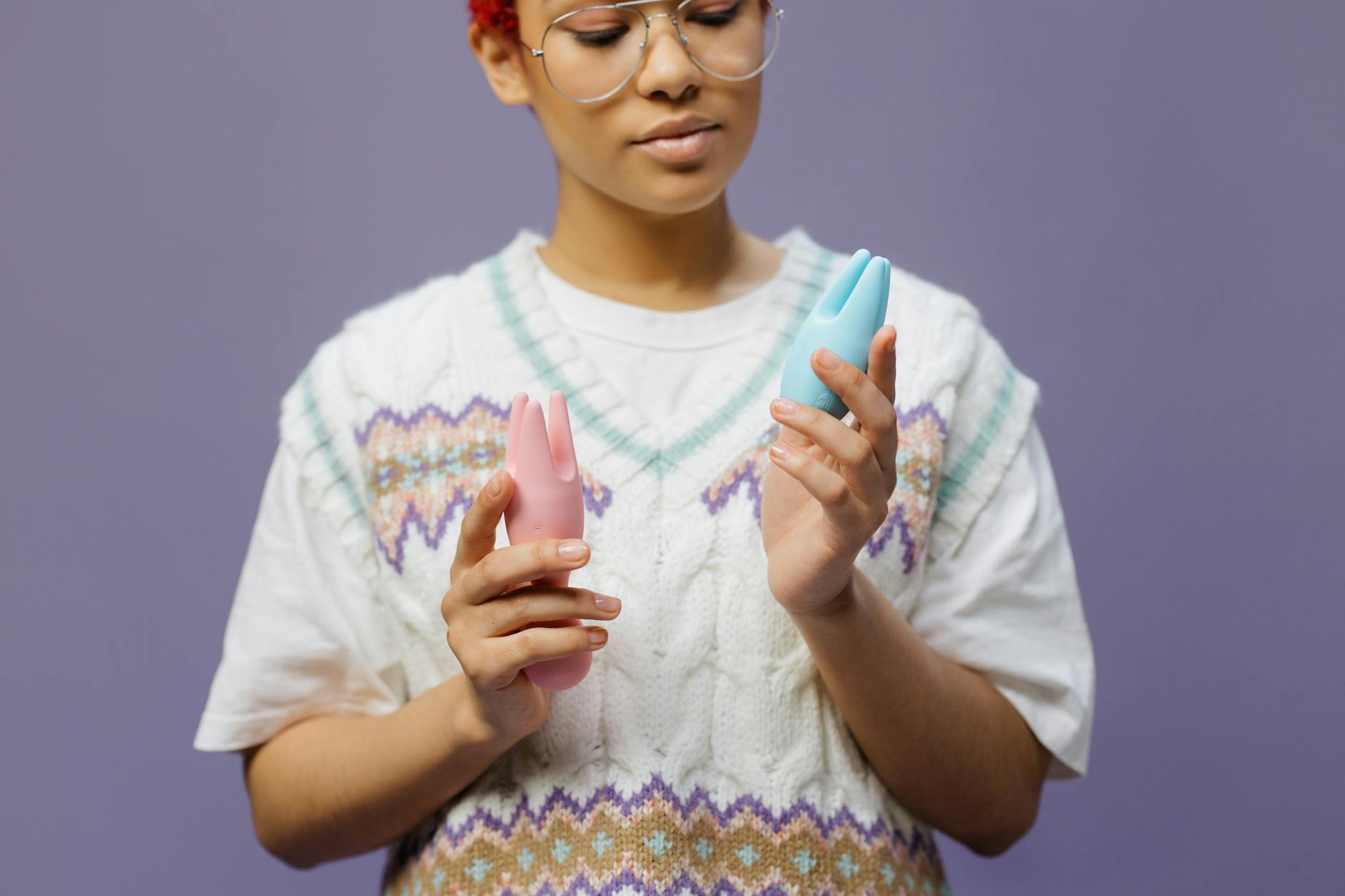
Why Lemon Vibrators Feel Different During Your Menstrual Cycle
Let's be real. Your lemon vibrator doesn't change. But the way your body responds to it absolutely does. Every week of your cycle, your hormones are rewriting the rules of sensation, arousal, and orgasm. That's not a problem to fix. It's information you can actually use.
I've had clients track their pleasure with their lemon clitoral vibrator across their cycle and text me things like, "Wait, so I'm not broken, I'm just in my follicular phase?" Yes. Exactly that. Understanding this rhythm transforms a tool from something that feels inconsistent into something that feels responsive.
How your cycle rewrites sensation
Estrogen and testosterone don't stay flat. They rise and fall in predictable waves, and with them, your sensitivity to touch, your desire to be touched, and your capacity to orgasm all shift. This isn't subtle. Some people report a 40 percent difference in arousal speed between their follicular phase and luteal phase.
Your clitoral tissue swells and shrinks slightly depending on the phase. Blood flow to the genitals changes. The vaginal opening becomes more or less elastic. The pelvic floor tension fluctuates. These aren't dramatic enough to stop you from having orgasms, but they're big enough that what felt perfect last week might feel slightly off this week.
A lemon vibrator, with its precise suction-based stimulation, can actually highlight these shifts. That's good. It means you're not imagining it. It means your body is doing exactly what it's supposed to do.
Follicular phase: the sensitivity sweet spot
Day 1 to around day 13 of your cycle (the first day of bleeding through ovulation), estrogen and testosterone are rising. Your clitoral tissue is becoming more engorged. Your pelvic floor is more relaxed. Blood flow to the genitals is increasing.
This is when a lot of people report that their lemon vibrator feels most responsive. Arousal builds faster. Orgasms can feel more intense because the tissue is more sensitive to stimulation. Some people find they can orgasm more easily on higher intensity settings during this phase.
If you've been wondering why certain days feel like your lem vibrator is absolutely perfect and other days feel like the same toy isn't quite hitting right, this is often why. Your body literally becomes more receptive during this window.
The play here is simple. If you have a favorite intensity level that you usually save for a specific mood, try it earlier in this phase. You might find that lower settings feel richer than you expected. Some people also report that this is when partnered sex or solo play feels most satisfying because warmup time shortens and pleasure builds in a more linear way.
Ovulation: the intensity peak
Around day 14, hormones spike. Testosterone surges. Dopamine rises. This is often when desire feels most urgent and orgasms can feel quickest to achieve.
For a lot of people using a lemon sucker or any clitoral vibrator, this is the phase where you might go straight to your preferred intensity setting without needing to build up. Some people find they can stack orgasms more easily. Others report that sensation feels almost overwhelming and they actually prefer lower settings to avoid that overstimulated feeling.
This is a good week to experiment if you've wanted to try a pattern setting you've been nervous about. Your body's natural arousal is doing half the work already. Or, if intensity usually feels good but sometimes too much, this is when you might dial it back and find that lower settings feel surprisingly satisfying.
The key is paying attention to what you actually want rather than what you think you "should" want. Some people genuinely don't want to come hard during ovulation. They want to come slowly. That's not less valid. It's just different.
Luteal phase: the recalibration week
Day 15 until bleeding, progesterone rises and estrogen fluctuates. Blood flow to the genitals decreases slightly. The clitoral tissue becomes less engorged. Your pelvic floor tension typically increases. Arousal can take longer to build.
This is often when people feel like their lemon vibrator isn't working as well as it was two weeks ago. It's not. Nothing broke. Your body is just in a different state. Clitoral tissue is less sensitive to vibration. You might need more time, more lube, more direct stimulation, or a combination of all three.
Some people find they prefer patterns over constant vibration during this phase because the varied rhythm feels more stimulating when continuous sensation feels dull. Others find they want more warm-up time before using the vibrator at all.
This is also the phase where mood, stress, and what's happening in your life have more influence on arousal. That's not a sign your vibrator is less effective. It's just how your brain and body are wired during high-progesterone days. A long foreplay window, something mentally engaging, or partnered play can shift the experience entirely.
The practical adjustments that work
Tracking doesn't have to be clinical. You can use notes in your phone, a period app, or literally just pay attention for two months. Notice what felt good when. The patterns emerge fast.
Here are the tweaks I see work most often across the cycle.
Follicular and ovulation phases often respond well to higher intensity settings and faster patterns on lemon vibrators. Some people find they want more direct stimulation and less warm-up time. Lubrication is nice but not always essential during this window.
Luteal phase usually asks for water-based lubricant, more warm-up time, and potentially lower or varied intensity settings. Some people find that building arousal with their partner or with their hands first, then introducing the toy, makes a bigger difference than any vibrator adjustment.
If you're consistently struggling during the luteal phase, ask yourself if it's actually a sensation issue or if it's fatigue, stress, or just not being in the mood. The vibrator doesn't fix emotional friction. It amplifies what's already there.
Why this matters for pleasure consistency
Most of the time, when someone says "my toy doesn't work as well anymore," what's actually happening is their body is in a different cycle phase. You haven't built tolerance to your lemon clitoral vibrator. Your hormones have shifted. That's fixable knowledge.
It also means you can stop blaming yourself for inconsistency. You're not broken. You're not less sexual on certain weeks. You're just responding exactly as your body is designed to. Working with that instead of fighting it changes everything.
If you've never tracked this before, try one full cycle. Notice when arousal feels quick versus slow. Notice which intensity settings feel best on which days. Notice whether you want patterns or steady vibration. Notice how your mood and what's happening in your relationship affects things.
At the end of 28 days, you'll have a map of your own pleasure. And that map is way more useful than any generic tip about lemon vibrators.
When cycle changes signal something else
If your cycle phase changes don't match these patterns, or if you're noticing sudden drops in sensitivity that don't align with hormonal phases, it's worth checking in with a gynecologist. Hormonal birth control, thyroid issues, antidepressants, and other medications can all flatten out these natural oscillations. That's not bad. It's just information.
Some people on hormonal birth control report that their sensitivity stays more consistent across the month. Others feel more muted overall. If you're exploring how your lemon vibrator works best and you're on medication or hormonal contraception, that's context worth keeping in mind.
Also, if your cycle suddenly shifts in length or intensity, that's your body's way of saying something has changed. Usually it's stress or travel. Sometimes it's something medical. Either way, you're allowed to check in with someone.
FAQ: cycle phases and clitoral vibrators
Does my menstrual cycle really affect how vibrators feel?
Yes, absolutely. Hormonal fluctuations change clitoral tissue thickness, blood flow to the genitals, and sensitivity to stimulation. These shifts are measurable and they affect how your lemon vibrator feels against your body. Some people experience dramatic differences. Others feel more subtle changes. Both are normal.
Which cycle phase is best for using a lemon clitoral vibrator?
There's no "best" phase. It depends on what kind of pleasure you're after. Follicular and ovulation phases often offer faster arousal, more sensitivity, and quicker orgasms. Luteal phase orgasms can be just as intense but might require more warm-up and lubrication. Menstruation itself is fine for vibrator use if you want to. Some people find orgasms help with cramps.
Should I use different intensity settings depending on my cycle phase?
Many people do, yes. During follicular and ovulation phases, higher intensity settings or faster patterns might feel better. During luteal phase, lower intensity or varied patterns often feel more stimulating when continuous vibration feels dull. But everyone is different. Track what works for you and adjust based on what feels good that particular day.
Can hormonal birth control change how my lemon vibrator feels?
Yes. Hormonal contraceptives flatten hormonal fluctuations, so some people report that their vibrator feels more consistent across the month. Others report that overall sensitivity decreases. If you're on hormonal birth control and curious about your sensitivity patterns, pay attention to how you feel on different brands or dosages. The effect is real but varies person to person.
What if my vibrator feels less effective during my luteal phase?
This is the most common question I hear. You're not building tolerance. Your body is in a different hormonal state. Water-based lubricant, longer warm-up time, and potentially lower intensity settings usually help. Also check whether you're more stressed, tired, or emotionally distant during this phase. Mental state affects arousal as much as hormones do.
Is it normal for my cycle to affect orgasm intensity?
Completely normal. Orgasms during follicular and ovulation phases often feel more intense because clitoral tissue is more engorged and sensitive. Luteal phase orgasms are different. They might feel more subtle or take longer to build. Neither is better. They're just different expressions of the same mechanism. Tracking helps you appreciate the variety instead of feeling frustrated by the inconsistency.
The bigger picture
Your lemon vibrator is a precision tool. It responds to exactly where you are in your cycle, what's happening in your relationship, your stress level, and your mood. That's not a flaw. That's it working exactly as designed.
Spend a few months paying attention. Notice the patterns. Then use that information to set yourself up for pleasure instead of fighting your body's natural rhythm. Your vibrator will feel more effective, your orgasms will feel more satisfying, and you'll know yourself better in the process. That's what the science actually says. That's what I see in practice. And that's worth the attention.