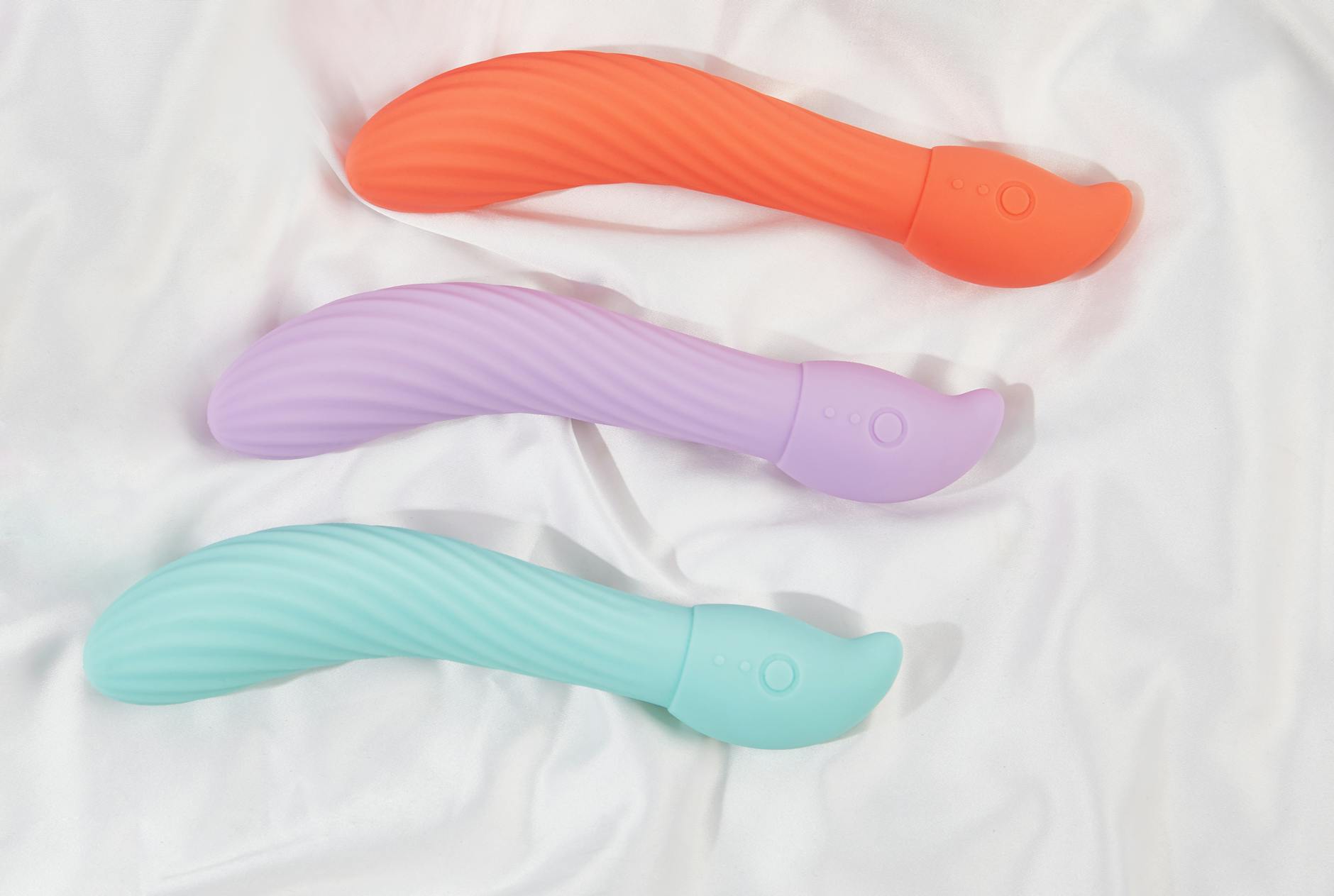
Let's be real about the silence
The hardest part of bringing a lemon vibrator into partnered sex isn't the vibrator itself. It's the three seconds before you say anything at all. Your brain runs through seventeen nightmare scenarios. Your partner thinks you're not satisfied. They'll feel replaced. They'll think you're bored. None of that is true, and yet.
I've worked with hundreds of couples navigating this exact moment. Here's what I've learned: the conversation works or doesn't work almost entirely based on your frame going in. Not your words. Your frame.
The frame that actually works
Most people approach this conversation like they're confessing something. Wrong frame. You're not asking permission for something you secretly want. You're inviting your partner into something that benefits both of you.
That shift changes everything. You move from "I need to explain why I want this" to "I want us to experience this together." One is defensive. The other is collaborative.
The second frame requires you to actually believe something first: that a clitoral vibrator isn't a replacement for your partner. It's an addition. Full stop. If you don't believe that, your partner will feel it immediately, and the conversation will stall.

Photo by cottonbro studio on Pexels
The actual conversation (word-for-word scripts)
Timing matters. Not during sex. Not right after, when you're both depleted. Pick a normal afternoon. You're cooking dinner, you're in the car, you're folding laundry. Neutral space, low stakes.
Here's a script that works because it's honest and specific:
"I've been thinking about trying something new together. I read about lemon vibrators, and I'm curious about how they feel. I think it could be really fun for both of us, and I'd love to try it with you. What do you think?"
That's it. You've named the thing, you've given a tiny bit of context (you researched it, you're curious), and you've made it clear it's collaborative.
If your partner asks why, the honest answer is usually one of these:
"I want to see if it changes how I come, and I want you there for it."
"I think it could feel good for me, and I'm interested in us trying new things together."
"I've heard they feel really different, and I'm curious. Plus I think it could be fun to explore with you."
Notice what these have in common: they're not about your partner's performance. They're not about anything missing. They're about wanting something.
What to do if they hesitate
Hesitation isn't rejection. It's usually one of three things: curiosity (they want to know more), concern (they're worried about something), or discomfort (they're not ready yet).
Your job is to listen and not fill the silence. Ask them what's on their mind. Let them answer.
If they're curious, that's easy. Show them a picture. Explain how a lemon clitoral vibrator works. There's nothing magical here. It's a tool that sends vibrations to your clitoris. That's the whole thing.
If they're concerned, listen to the concern specifically. The most common ones:
"Will it hurt?" No. It's designed to feel good. You control the intensity.
"Does this mean I'm not enough?" This is the big one. The honest answer is: no. And here's why. Just like a vibrator doesn't replace you, a vibrator doesn't replace anything about your partner. It does something different. You can orgasm from a vibrator and still want your partner's touch. Those aren't competing experiences.
If they're not ready, that's fine too. You don't push. You say "Okay. If you want to talk about it later, I'm here." Then you drop it. Trust builds when people feel genuinely respected, not pressured.
The couples I've worked with who integrate vibrators successfully share one thing: they don't make it a referendum on the relationship. It's just a thing they're trying. Some couples love it. Some use it occasionally. Some decide it's not for them. All of those are fine.
How to actually introduce it during sex
Once you've talked and you've both agreed to try, the next conversation happens non-verbally.
Don't surprise them with it. Before you get intimate, remind them: "Hey, I'm going to use the vibrator tonight." That's all you need. No build-up, no framing.
When you're ready to use it, show them first. Let them see it, feel it, hear it at a low setting. Familiarity kills anxiety. Once they've seen it and touched it, it stops being this mysterious thing.
Then use it however feels natural. Some people incorporate it while their partner's inside them. Some use it while their partner's watching or touching them elsewhere. Some prefer to use it solo while their partner's present. All of those are fine. You figure it out as you go.
The point is: your partner's role hasn't vanished. It's just evolved.
Why the lem vibrator conversation matters specifically
Lemon vibrators, the Lem in particular, use a different technology than traditional vibrators. They use suction rather than just vibration. That's actually useful information to share with your partner because it explains why it feels different.
"It doesn't buzz like an old-school vibrator. It actually pulls gently on the clitoris. It feels more like oral sex than anything else." That framing helps your partner understand it's not some sci-fi replacement. It mimics something they probably already know how to enjoy.
If you've read through posts like "Why Lemon Vibrators Make Better Partners for Couples", you've already got language for this. Your partner doesn't need to read it. You just need to translate: lemon vibrators enhance partnered sex rather than compete with it. That's the actual insight that matters.
The conversation after the first time
Check in after. Not immediately. The next day or a few days later when you're both thinking clearly.
"How did that feel for you?" Simple question. Let them answer.
If they loved it, great. You can talk about doing it again, maybe trying different patterns, maybe exploring other things together.
If they felt neutral, that's normal too. Novelty wears off. Sometimes things that seem exciting in theory feel less exciting in practice.
If they felt uncomfortable, ask what specifically. Was it the feeling? The idea of the vibrator? The loss of something? Listen without defending. You can't solve a problem you don't actually understand.
The couples who stay connected through new sexual exploration share a specific skill: they stay curious instead of defensive. When something doesn't land, they ask questions instead of assuming. When something works, they celebrate it without overthinking it.
The deeper thing nobody talks about
Introducing a vibrator into partnered sex is actually just a small version of a much bigger conversation: what do we both want, and how do we make space for both of us to get it.
That's the real skill. And once you have it, the vibrator part is easy. Once you can talk about a clitoral vibrator, you can talk about anything. You've already learned the language.
Your partner's pleasure matters. Your pleasure matters. A lemon vibrator doesn't threaten that. It extends it.
Frequently asked questions
How do I know if my partner will be into this?
You don't. That's the whole point of asking instead of assuming. Some people are wildly enthusiastic immediately. Some need time to warm up. Some never get excited about it and that's genuinely fine. The openness to the conversation matters more than the outcome.
What if my partner wants to use the vibrator on me but I want to use it myself?
There's no rule here. Tell them exactly that. "I actually prefer using it myself because I can control exactly where the sensation is." If that feels like a rejection to them, remind them that you controlling the vibrator has nothing to do with what you want from them. You can use a vibrator and still want your partner's hands, mouth, or body on you everywhere else.
Can we use a lemon vibrator during penetrative sex?
Yes. A lot of people do. You can use it on the clitoris while your partner's inside you, or your partner can hold it while you're together. Some people find that clitoral stimulation during penetration changes the intensity of their orgasm. You'll figure out what works by experimenting. There's no wrong way.
What if I'm embarrassed?
That's normal. Embarrassment doesn't mean you shouldn't do it. It usually just means you're about to do something that matters to you. The embarrassment fades. The memory of trying something new together doesn't.
How do I make this feel sexy instead of clinical?
Don't overthink it. Honestly. The couples who stress the least about the transition are the ones who treat it exactly like that: a transition, not a production. You're not filming anything. You're not performing. You're just trying something with someone you like. That's it.
Should I ask permission every single time?
No. After the first few times, it becomes part of your sexual vocabulary. You don't need to ask permission to kiss your partner every time either. But if it's been a while, a quick "mind if I use the vibrator tonight?" is thoughtful. It takes five seconds and keeps things collaborative.
The last thing
Introducing a lemon vibrator into your partnered sex life isn't actually about the vibrator. It's about deciding that your pleasure and your partner's pleasure both matter, and that you're willing to be specific about what helps you get there. That's the real conversation.
Everything else follows from that.
Ready to explore together? Start with the conversation. That's always the first step.