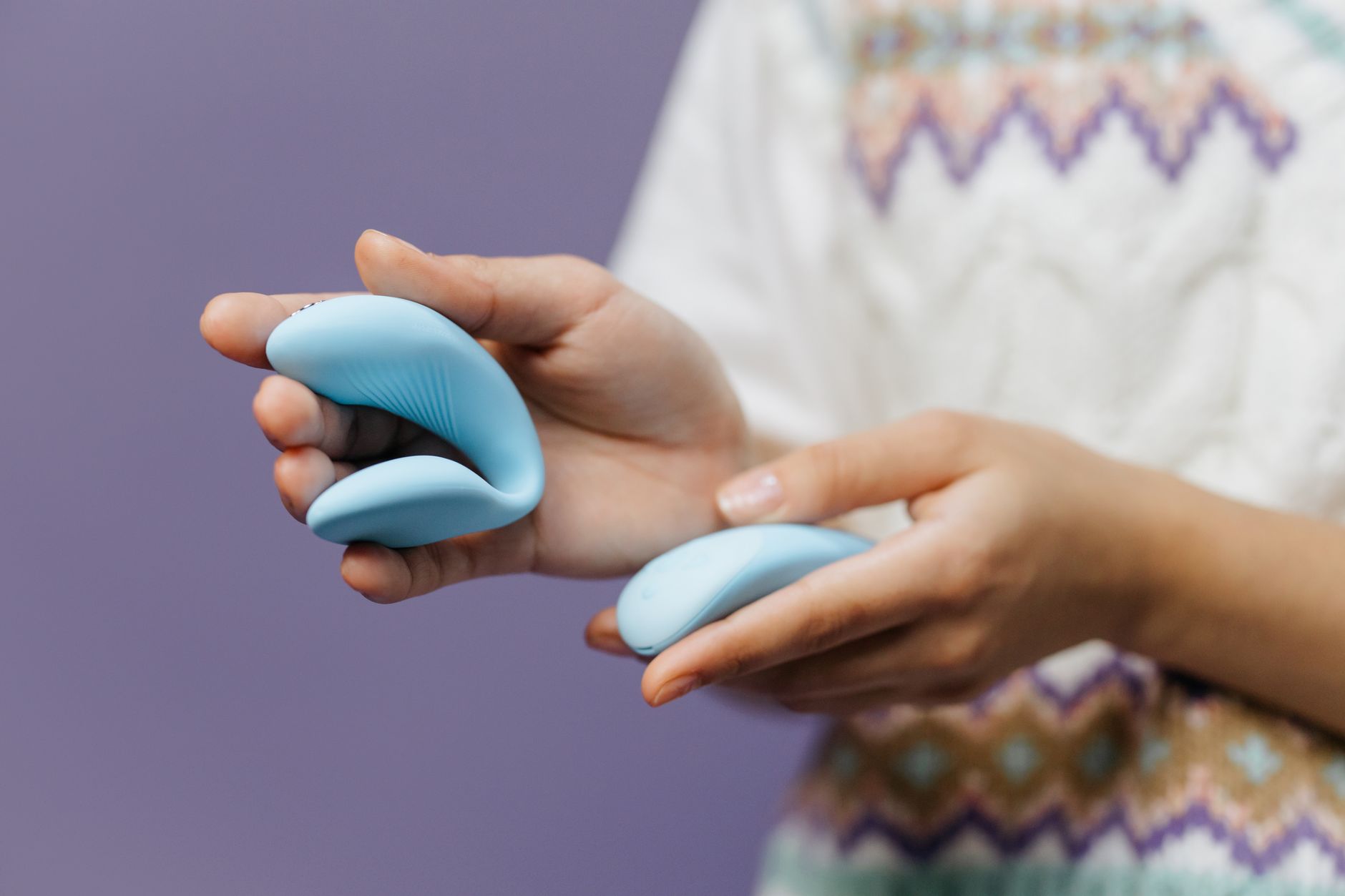
Here's the thing about stress and pleasure
You're in the mood. You reach for your lemon vibrator. And then... nothing. Or worse than nothing. It feels disconnected, weak, or even uncomfortable. Your body isn't responding the way it usually does. The usual suspects aren't to blame. Your hormones are fine. Your relationship is solid. So what's going on?
Stress. Specifically, what stress does to your nervous system's ability to register sensation at all.
This isn't a you problem. This is a neurology problem. And once you understand the mechanism, you can actually work with it instead of against it.
How stress hijacks your arousal response
When you're anxious or under sustained pressure, your sympathetic nervous system takes over. This is your fight-or-flight wiring. It's useful when you're dodging traffic. It's terrible when you're trying to orgasm.
Here's what happens physiologically. Cortisol and adrenaline rise. Blood vessels constrict. Your brain deprioritizes pleasure signaling because, from an evolutionary standpoint, having an orgasm is less important than surviving a threat. Your pelvic floor tightens. Lubrication decreases. The neural pathways that normally light up during arousal go quiet.
Meanwhile, your clitoral tissue is still there. Your lemon clitoral vibrator still works. But your nervous system isn't translating the sensation into pleasure. It's translating it into noise.
Many of my clients describe it as feeling muted, distant, or like they're watching themselves from outside their body. That dissociation isn't emotional. It's neurological.
The stress load matters more than the stressor
Honestly, it's not about what's stressing you. A work deadline, a family conflict, financial pressure, even positive stress like planning a wedding. They all flood your system with cortisol.
What matters is cumulative load. A single stressor? Your body can usually partition that off from your pleasure. But when multiple stressors layer on top of each other—work anxiety, relationship tension, health concerns, life admin—your nervous system stays jammed in sympathetic mode. It never downshifts.
This is why plenty of people find that vacation sex is incredible. It's not the novelty. It's that your cortisol finally dropped. Your parasympathetic nervous system (rest and digest) got a chance to take the wheel. Pleasure became available again.
If you can't take a vacation, you need to deliberately trigger parasympathetic activation.
What actually helps before reaching for your lemon vibrator
Three things, in order of importance.
1. Calm your nervous system first. I don't mean "try to relax." I mean active parasympathetic engagement. That's 10 to 20 minutes of deep breathing (especially longer exhales), a warm bath, gentle movement, or meditation. Your body needs to downshift out of threat mode before sensation will feel accessible.
2. Create time and space without task orientation. Most people try to use a lemon sexual toy as a quick fix while they're still mentally clocked into work or whatever else is stressing them. Your brain can't switch gears that fast. Budget 20 to 30 minutes of genuine separation from whatever's causing the stress. No phone. No mental loop about the deadline.
3. Check in with your baseline arousal. Before you pick up your lemon vibrator, spend 5 to 10 minutes on non-goal-oriented touch. Slow, attentional stroking. Notice what you notice. This tells your nervous system that this is a safe space, not a performance.
Why sensation feels delayed or muted
When cortisol is high, it takes longer for your nervous system to register pleasure signals. This isn't something wrong with your lemon clitoral vibrator or your anatomy. It's that the message from your tissue to your brain is taking a slower route.
You might notice that sensations feel like they come late. You apply the vibrator and there's a lag before you feel it. Or it feels like static instead of a clear signal. Some people describe it as needing much stronger stimulation to feel anything at all.
This is temporary. It's a state, not a trait. Once your cortisol drops, the lag disappears.
The difference between stress numbing and anhedonia
Stress-related sensation dampening is not clinical depression. Anhedonia (the inability to feel pleasure in anything) is a different beast and often needs professional support.
Here's the distinction: stress numbing is situational. It resolves when the stressor lightens or when you deliberately calm your nervous system. You still care about pleasure. You still know what feels good normally. Right now it's just muted.
Anhedonia is more pervasive. Nothing feels good, whether you're calm or stressed. Everything tastes like ash. If that's what you're experiencing, talking to a therapist or doctor is important.
The role of anticipatory anxiety
Here's a tricky layer. Sometimes the stress isn't just ambient life pressure. It's anxiety about the sexual experience itself. Worry that it won't work. Pressure to perform. Frustration that sensation isn't showing up.
That meta-anxiety (anxiety about having anxiety) makes everything worse. You're stressed about being stressed, which keeps cortisol elevated, which keeps sensation muted.
Break the loop by lowering expectations. On a high-stress week, the goal isn't orgasm. The goal is to notice what you do feel, without judgment. Touch a lemon vibrator. Notice. That's it. Orgasm might happen. It might not. Neither is the point.
What changes when stress actually resolves
Once your nervous system genuinely quiets down—not just mentally, but somatically—pleasure comes roaring back. Often intensely. The same lemon clitoral vibrator that felt like a dud suddenly feels incredible.
This can take 48 hours to a week, depending on how deep the stress runs. But it's reliable. It's not permanent numbing. It's a state.
If you're in a high-stress phase of life and you want to maintain some sexual wellness, focus on nervous system care. That's 80% of the work. The tools—whether that's a lemon vibrator, partner touch, or anything else—work once your parasympathetic nervous system is online.

Photo by cottonbro studio on Pexels
Practical strategies for pleasure during stressful seasons
If you can't eliminate the stressor, you can at least manage how much cortisol your body holds onto.
Build a pre-pleasure ritual. This signals to your nervous system that you're shifting out of threat mode. It might be a specific shower, a change of clothes, lighting a candle, or a 10-minute walk. Something your body recognizes as "this is safety now."
Use guided parasympathetic tools. A body scan meditation, breathwork audio, or gentle yoga are all faster than trying to think your way into calm. Your nervous system responds to physical input, not willpower.
Consider communication with your partner, if you have one. "I'm in a stressed season and sensation feels muted right now" is way better than trying to fake arousal and then feeling frustrated. Knowing your partner understands removes the performance pressure.
Go slower with your lemon vibrator. Start at lower settings. Give your nervous system time to catch up. What works on a calm day might feel jarring during high stress. Adjust the intensity to match your actual availability, not your memory of what usually works.
You might also explore whether a different type of stimulation helps. Some people find that suction-based lemon toys like the Lem feel more accessible during stress because they don't require the same kind of direct pressure. The sensation is gentler to decode.
When it's stress plus something else
If you've lowered your stress, given yourself space, and sensation still isn't showing up, there might be another layer. Sometimes what looks like stress numbing is actually a sign that something else needs attention. Relationship conflict. Hormonal shifts. Medication side effects. Past trauma being triggered.
That's when it's worth talking to a therapist, particularly one trained in somatic therapy or sex-positive approaches. A professional can help you figure out whether this is nervous system regulation or something that needs deeper work.
Most of the time, though, it's stress. And stress is fixable.
The bigger picture
Your nervous system is the real gatekeeper of pleasure. A lemon vibrator, a partner, anatomy—those are all tools. But if your nervous system is jammed in fight-or-flight, the tools don't matter.
The good news is that nervous system regulation is learnable. It's not about eliminating stress (impossible) or achieving permanent calm (also impossible). It's about your body's ability to shift between threat and safety. That's trainable.
When you invest in that capacity, pleasure becomes available again. Not just sometimes. Reliably.
People also ask
Can stress permanently damage my ability to feel pleasure with a lemon vibrator?
No. Stress numbing is a temporary state, not permanent damage. Your nervous system is designed to shift between arousal and calm. Once cortisol levels drop and you give your body time to recalibrate, sensation returns to baseline. The lemon clitoral vibrator that felt muted will feel normal again. This typically takes days to a couple of weeks once the stressor lifts.
How long does it take for sensation to come back after high stress?
It depends on how long you've been stressed and how deeply the stress penetrated your nervous system. If it's acute stress from one event, sensation might return within 24 to 48 hours. If you've been under sustained pressure for weeks or months, it can take a week or two of genuine parasympathetic activation. The key is that you need to actively calm your nervous system, not just wait for the stress to pass.
Does meditation actually help sensation with a lemon sexual toy?
Yes, but not because meditation is magical. Meditation directly calms your parasympathetic nervous system, which is the physical requirement for pleasure to be accessible. Even 10 minutes of guided meditation or breathwork can shift your nervous system state enough to make a difference. The effect is measurable and consistent.
What if I use a lemon vibrator when I'm stressed and it doesn't feel good?
This is normal and not a failure. Your nervous system is telling you it's not ready. Instead of pushing through, pause. Spend 20 minutes on parasympathetic work first. Breathwork, a bath, gentle stretching. Then try again. You're not broken. You're stressed. There's a difference.
Can my partner help me feel sensation again when I'm stressed?
Absolutely. But the most helpful thing a partner can do is not pressure or persuade. Instead, they can help you calm your nervous system through grounding, touch, or just being present. Once you're more parasympathetically activated, sensation becomes available. Partner touch without goal orientation is often more regulating than solo play during high stress.
Is stress-related numbness the same as having a low sex drive?
Not necessarily. A low sex drive is a sustained lack of desire. Stress-related numbness is a temporary dampening of sensation and arousal capacity, even when desire is still there. You might want to have pleasure, want to use your lemon vibrator, but your nervous system isn't delivering the goods. That's stress. Once you address it, desire and sensation typically return together.
Resources
If you're navigating stress and its impact on your intimate life, a few evidence-based approaches can help. The Gottman Method, which focuses on nervous system regulation within relationships, offers research-backed techniques for reducing stress together. Somatic experiencing therapy specializes in how the body holds stress and how to discharge it. And apps like Insight Timer or Calm offer guided parasympathetic activation if you need quick, accessible tools.
For deeper support, consider reaching out to someone who specializes in both relationship dynamics and somatic awareness. They can help you understand whether this is pure stress or a sign that something else in your relationship or life needs attention.
Your nervous system is listening. Give it what it needs, and pleasure will follow.