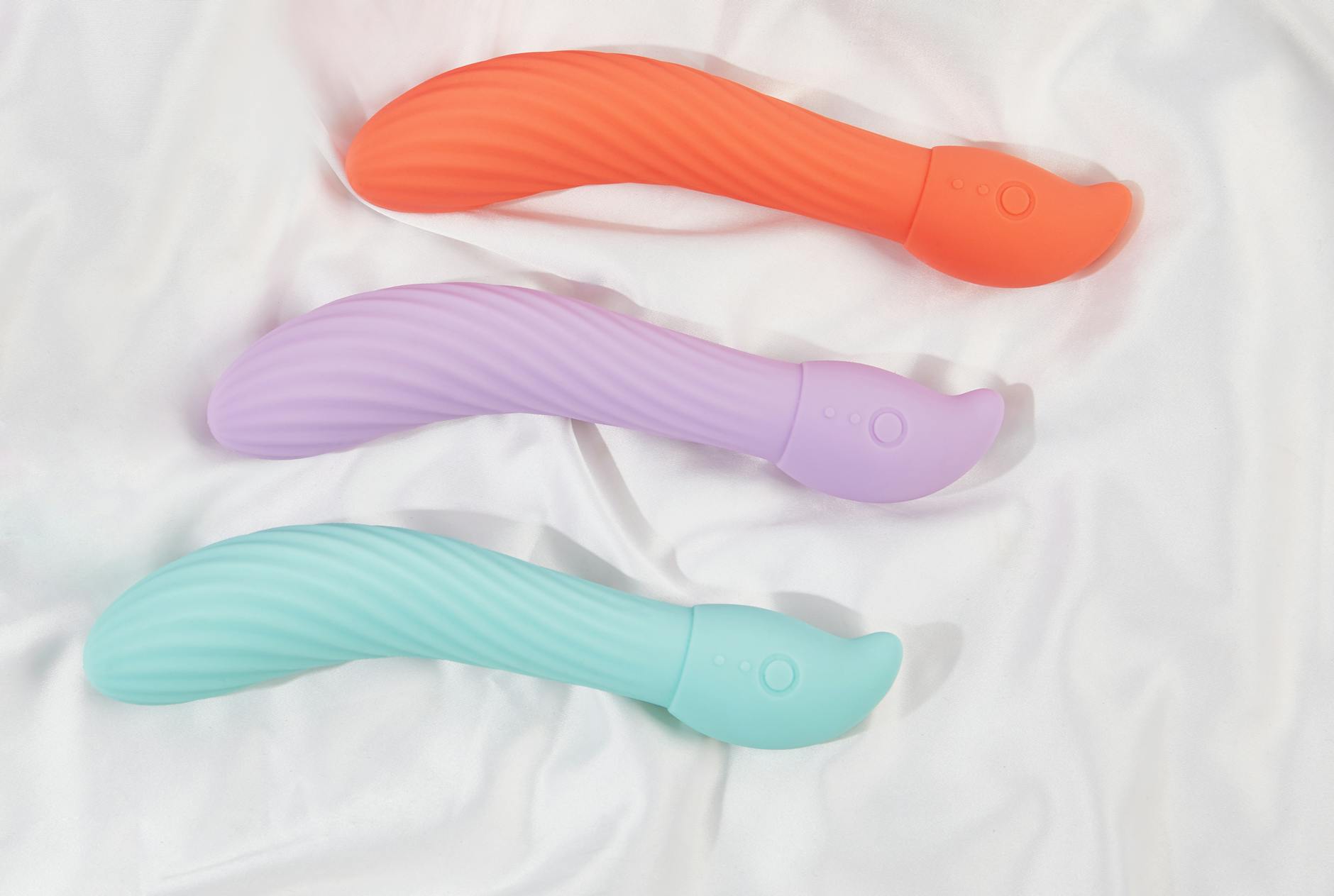
The honest part about distance and desire
Long-distance relationships kill sex. Or do they? Here's what I've learned after two decades working with couples separated by time zones, work commitments, and actual distance. The truth is weirder and better than the myth.
Distance doesn't kill desire. It kills routine. And sometimes losing routine is exactly what a couple needs to actually prioritize pleasure again.
That shift matters. It means you're not waiting for sex to happen between the sheets at 10 p.m. on Friday. You're building it intentionally. A lemon vibrator, a video call, and 20 minutes of focus can create more sustained connection than six months of geographically convenient neglect.
Why lemon clitoral vibrators work for long-distance couples
The suction technology behind a lemon vibrator changes the game for remote intimacy. Here's why.
First, sensation reads differently on a video call. When your partner can see your response in real time, a toy that creates visible, audible feedback works better than vibration alone. The suction pulse of a lemon vibrator is rhythmic and pronounced. Your partner sees your breath catch. Hears the tiny shift in your voice. That feedback loop is what makes remote play feel intimate instead of lonely.
Second, timing. A traditional vibrator demands constant attention to intensity and pattern. A lemon suction toy, once you find your rhythm, can sustain a feeling without requiring you to adjust settings every 30 seconds. This means you can actually stay present and connected instead of fumbling with buttons.
Third, pleasure trajectory. Suction builds arousal more gradually than vibration. That longer arc means you and your partner can sync up better. You're not racing to climax. You're building toward it together, even on different continents.
Setting up for success: the practical stuff
Timing matters more than you'd think. Pick a moment when you both have at least 30 minutes of genuine focus. Not the 15-minute window between dinner and a work call. That's not long-distance intimacy. That's maintenance. Real connection needs space.
Both of you should be in a private space. This isn't negotiable. If your partner is listening from a dorm hallway or you're squeezing this in during a lunch break, the mental safety evaporates and so does the pleasure. Permission matters. Create the conditions where you both actually feel allowed to be fully present.
Use a video platform you trust. Not just for privacy, but for reliability. A dropped call mid-arousal is a momentum killer. Test your connection beforehand. Low light, clear angle, no surprises. You're not performing. You're showing.
Have lube nearby. Even if you normally don't need it, have it. Arousal can be slower when you're nervous about a video call. A quality water-based lube removes friction and takes pressure off. It also signals to your nervous system that this is intentional and cared for, not rushed.
The psychological piece that actually matters
Here's what I see go wrong. Couples treat remote intimacy like they're performing for an audience instead of connecting with their partner. There's a difference, and it changes everything.
When you're focused on how you look, how you sound, whether your angle is flattering, your nervous system stays sympathetic. That's your fight-or-flight mode. You can't orgasm from fight-or-flight. You need your parasympathetic system online. That's rest-and-digest.
One way to shift this: don't make eye contact the whole time. I know that sounds backward. But for many people, constant direct gaze creates performance pressure. Look down sometimes. Look away. Let your partner see you lost in sensation, not performing sensation. Weirdly, that's far more intimate than maintaining eye contact.
Second, talk before and after, not during. Some couples try to have a full conversation while using a lemon vibrator. That splits attention and kills arousal. Sync up beforehand about what you're both in the mood for. Then stay mostly quiet during. Let your bodies do the communicating. Debrief after.
Third, remember this is a tool for connection, not a replacement for your partner. A lemon vibrator is not the intimacy. Your partner is. The toy is just a bridge. That mental shift prevents the loneliness that sometimes sneaks in during remote play.
Building a rhythm without pressure
The couples who keep long-distance intimacy alive are the ones who stop treating it like a special occasion. It's not your anniversary. It's Tuesday.
I recommend a loose weekly rhythm. Not a rigid schedule, but an expectation. "Most Thursday nights we do this." Not because passion demands it. Because consistency builds safety. And safety builds arousal.
That rhythm also means you're not relying on spontaneous desire, which is fragile when you're apart. You're building anticipation. Wednesday night, you're thinking about Thursday. That mental foreplay matters. By the time the call happens, you're already halfway there.
If a Thursday gets missed, you don't restart. You just shift to Friday or bump it to next week. The pressure of perfection kills more long-distance relationships than distance itself. Flexibility keeps it alive.
Some couples find it useful to explore different scenarios or sensations on rotation. One week is just about synced pleasure. The next is more playful. The third might be slower and more intimate. Varying the experience keeps it from becoming rote, which is the real intimacy killer over time.
When to use a lemon vibrator versus other approaches
Not every long-distance call needs to be sexual. Sometimes your partner needs you present in a non-sexual way. A lemon vibrator is not the answer to that.
But when you're both actually in the mood, when desire is present and you want to build something together across the distance, suction toys like a lemon clitoral vibrator outperform traditional vibrators. They create more interaction, more feedback loops, and a slightly longer pleasure arc. That extra time is where connection lives.
If your partner isn't interested in video calls during sex, a lemon vibrator still works for solo remote play. You can text. Send photos. Build anticipation. Use the toy by yourself, knowing they're doing the same thing at the same time. That's a different kind of connection, but it's real.
Troubleshooting the common friction points
Sometimes arousal just won't come. You're on the call, you've got 20 minutes blocked, and nothing. Stop. That's your nervous system telling you something. Don't push. Close the call, reconnect later, try again.
Pressure is arousal's enemy. The moment you shift into "I should be turned on by now," you've lost it. One partner can usually sense when the other is forcing it. That kills the whole thing.
If connection keeps falling flat, the issue is probably not the toy or the tech. It's that something in the relationship itself needs attention. Are you fighting? Is there resentment? Is one of you actually not in the mood but showing up out of obligation? Those things surface faster in remote intimacy than in person.
Use that information. Go back to the non-sexual stuff. Rebuild safety. Then try again when you're both genuinely ready.
What's actually happening when it works
When a long-distance couple successfully uses a lemon vibrator together, they're doing something that sounds small but isn't. They're saying, "Your pleasure matters to me across distance. I'm choosing to be present even when geography makes that complicated."
That matters more than the orgasm. The orgasm is nice. The message is everything.
Distance doesn't kill desire. Distance kills routine. And sometimes that's exactly what a relationship needs.
Long-distance doesn't have to mean sexless. It means intentional. A lemon clitoral vibrator isn't a hack to keep sex alive across distance. It's a tool for couples who've decided that pleasure matters enough to build it carefully.
People also ask
Can you use a lemon vibrator on a video call if you're nervous?
Absolutely, and you should probably start here anyway. Nervousness is normal. Your partner has already seen your body. They want to see you in pleasure. The vulnerability gets easier the more you do it. Start with clothes on if that helps. Gradually undress as you get comfortable. There's no rush to full nakedness on call one. Build toward it.
How do you sync timing if you're in different time zones?
You schedule backward from a time that works for both of you. If you're eight hours apart, that limits your options. Plan for one weekend morning or evening when the timing is reasonable for both. You can also do asynchronous play where one partner goes first, sends video or a text, and the other responds later. Different but connected.
Is it weird if only one partner wants to use a toy during video sex?
Not at all. If one of you wants to use a lemon vibrator and the other doesn't, that's fine. One person with a toy and one without is totally normal. Communication about it beforehand prevents awkwardness. "I'd like to use my vibrator during our call" takes 10 seconds and prevents weird tension.
What if you don't have good video privacy at home?
Then video calls might not be your path right now. Remote intimacy has other forms. You can have phone sex. You can send photos or voice messages. You can text dirty during the day and be fully clothed during calls. There's no requirement to be on video. Adapt the idea to what actually works for your life.
Does using a lemon vibrator together actually build intimacy?
Yes. Not because of the toy itself, but because of what it requires: vulnerability, communication, and mutual attention. You're literally seeing and being seen during pleasure. That's an intimacy builder. The lemon vibrator is just the excuse to create the conditions where that can happen.
How often should long-distance couples do this?
As often as you both actually want to. For some couples that's weekly. For others it's twice a month. The magic number is whatever keeps both people interested without resentment creeping in. If it starts to feel like an obligation, dial it back. If you're both always craving it, do it more. Listen to what your connection is telling you.