Let's start with the honest part
Mismatched sensitivity is one of the most common things couples don't talk about. One partner climaxes in five minutes. The other needs twenty. One thrives on gentle touch. The other wants sustained pressure. You're both normal. You're just wired differently.
Here's what usually happens: someone gets frustrated, someone else feels rushed or inadequate, and then sex becomes a performance metric instead of mutual exploration. A lemon clitoral vibrator shifts that entire dynamic because it lets both of you find pleasure on your own timeline without one person doing all the work.
Why sensitivity mismatches happen (and they're not a problem)
Sensitivity differences aren't about attraction or health. They're about nerve density variation, arousal baseline, mental load, and sometimes medication or hormonal factors. Research shows that in about 60 percent of couples, there's a noticeable gap in how quickly partners reach arousal or orgasm. That's not a failure. That's just biology.
The second thing: sensitivity often changes within the same person depending on stress, cycle timing (if applicable), what you ate that day, how tired you are, or whether you're thinking about work emails. What worked last month might need adjustment this month. Flexibility is the whole game.
How lemon vibrators solve the problem
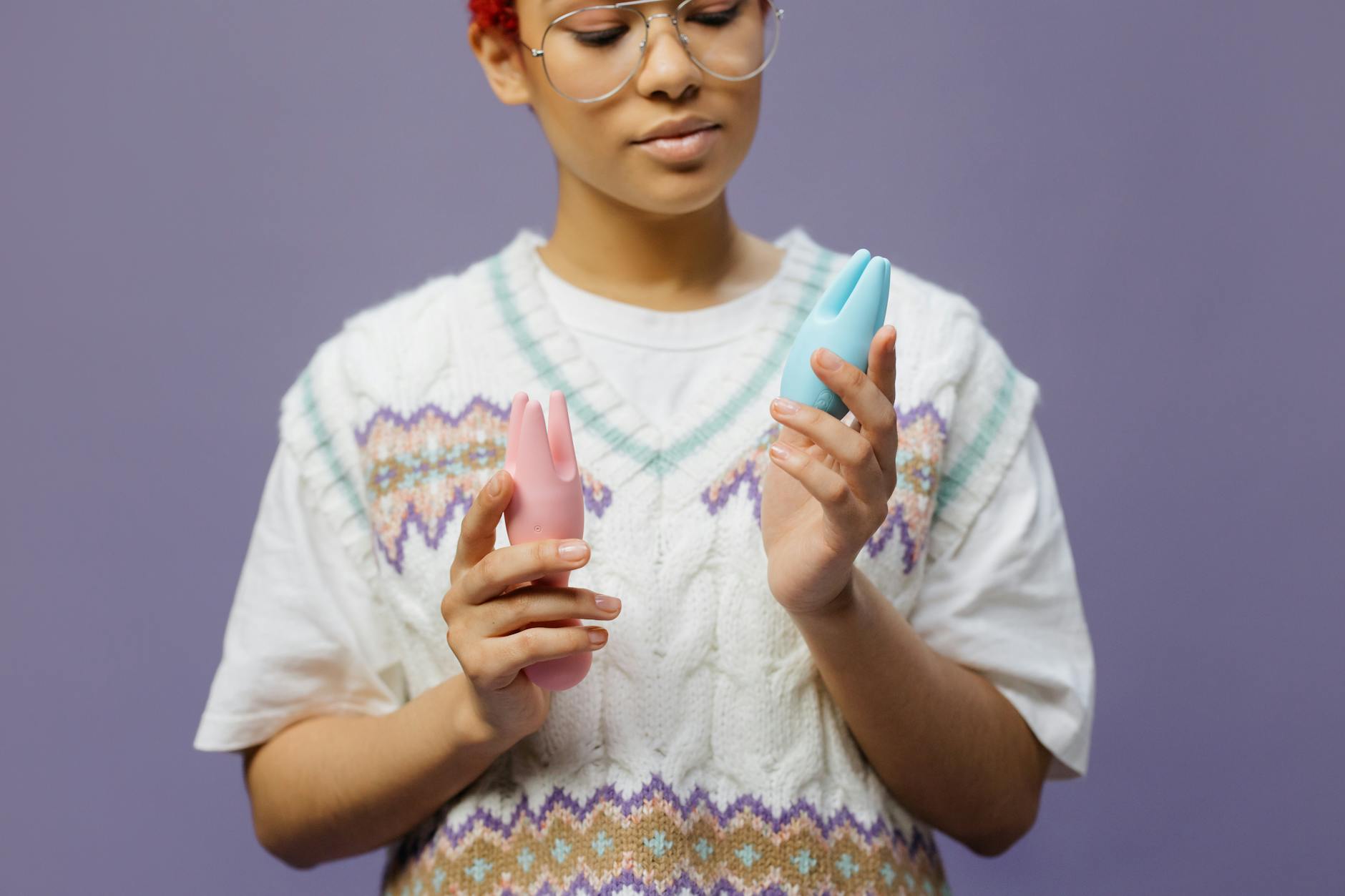
Clitoral suction technology like the lemon vibrator works differently than traditional vibration. Instead of asking the body to build response through repetitive stimulation, suction creates a broader wave of stimulation that works across a wider range of sensitivity levels.
This matters because it means:
- The partner with lower sensitivity can use it solo for quicker, more reliable pleasure without pressure to "keep up."
- The partner with higher sensitivity can use lower intensity settings without overstimulation.
- Both of you can use one together in partnered play and meet somewhere in the middle.
- You're not locked into the same rhythm, which removes the performance anxiety that tanks arousal for so many couples.

Photo by DRT.fm . on Pexels
The practical strategy: before you get intimate
Here's the conversation to have (not during sex, but maybe over coffee, or somewhere neutral):
"I've noticed we reach arousal at different speeds, and I don't think we've ever talked about what actually feels good for each of us separately. I want us both to have pleasure that's actually satisfying, not rushed. Can we explore that together?"
That's it. Simple, honest, zero blame.
Then establish some baseline facts:
- How long does arousal typically take for each of you?
- Do you prefer building slowly or do you like intensity from the start?
- What's overstimulating vs. underwhelming?
- What's the pressure like? Are you performing, or actually present?
Write it down if it helps. Seriously. The specificity is useful.
Using a lemon vibrator when one partner gets there faster
Let's say you climax in ten minutes and your partner needs thirty.
Option 1: They use the lemon vibrator solo while you focus on other types of stimulation. Hands, mouth, whatever works. The vibrator isn't replacing you. It's evening out the timeline so you're both reaching satisfaction around the same point.
Option 2: You both start with foreplay, then introduce the vibrator once you're both aroused. This works well because arousal syncs the nervous system. The faster partner might use it on lower settings (patterns 1-2 on the Lem) to extend pleasure rather than rush to climax.
Option 3: You use it on your partner for focused stimulation while you handle your own arousal differently. This removes the "performing for someone" sensation that kills pleasure for many people.
The key: decide this before clothes come off. Not mid-play when someone's already frustrated.
Using a lemon vibrator when one partner needs more intensity
If you're the one who needs sustained pressure, you know the problem. A partner's hand gets tired. Regular vibration feels buzzy but shallow. You end up faking it to release the tension, which just... doesn't work.
Clitoral suction technology changes that because it delivers sensation that feels more complete. You can stay on the same pattern for longer without that numb, overstimulated feeling that regular vibrators create. And the partner providing manual stimulation can take a break without that creating a gap in the pleasure chain.
The rhythm that works for mismatched partners
Timing matters. Here's a structure that helps:
Phase 1: Synchronous foreplay (10-15 minutes). Both of you focus on non-genital touch, kissing, whatever builds arousal together. Get both nervous systems activated.
Phase 2: Differentiated pleasure (15-20 minutes). This is where the lemon vibrator enters. The partner who typically needs less time starts first with the device on a low-to-medium setting. The other partner provides different stimulation, penetration if that applies, or their own hand. The point is simultaneous but different input.
Phase 3: Sync-up (final 5-10 minutes). As you both approach climax, you can intensify together or the faster partner can pull back slightly (breathing, position shift) to let the other catch up.
None of this is rigid. This is scaffolding you can adjust.
When medication or stress changes the picture
Sensitivity isn't static. SSRIs, birth control changes, antidepressants, high stress, sleep debt, or hormonal fluctuations can shift sensitivity significantly. When that happens, many couples blame the relationship instead of acknowledging the external factor.
If one partner suddenly needs way more time, or conversely, if sensation feels muted after starting new medication, that's the time to revisit this conversation. What worked three months ago might need recalibration. The lemon vibrator is adaptable to that shift in a way that manual stimulation alone often isn't.
The emotional part (this matters as much as technique)
Mismatched sensitivity feeds a narrative: "They finish and I'm still going" or "I'm too much" or "They're not interested in my pleasure." None of those are true, but they start to feel true if you're not naming the actual dynamic.
Using a device like the lemon vibrator together actually rewires that. Because now pleasure isn't about performance. It's about both of you finding what works. It removes the stakes from someone's body and redirects them toward mutual exploration.
This is what couples therapy calls "collaborative problem-solving." You're treating sensitivity mismatch as a puzzle to solve together, not as evidence that something's broken.
Getting started without awkwardness
One partner orders a lemon clitoral vibrator. You unbox it together. You read the instructions together. You laugh at something if you want to laugh. Then you try it on your own first, separately, so you both know what the sensation feels like before partnered play.
That solo exploration is crucial because you can't help your partner use something you've never felt yourself. You won't know if the intensity is too much or too little. You'll be guessing.
Once you've both felt it solo, bringing it into partnered play is straightforward.
FAQs
What if one partner is uncomfortable with toys?
Start there. The discomfort usually isn't about the toy. It's about what the toy represents (threat to intimacy, performance anxiety, belief that partners "should" be enough). A conversation about why the toy feels threatening is more useful than introducing it anyway. Once you understand the root, you can address that. Sometimes it's just exposure and time. Sometimes it's a deeper conversation about what partnership means to you both.
Can we use the lemon vibrator on both of us at once?
Yes, but not simultaneously on the same area. The lemon vibrator works well for one person at a time on the clitoris. You could alternate, or one partner uses it while the other receives different stimulation. Some couples appreciate that intentional turn-taking because it removes the pressure to "do" while also experiencing pleasure.
How long does it take sensitivity to "sync" with a toy involved?
There's no timeline. Some couples feel the shift after one experience. Others need a few weeks of consistent, pressure-free exploration. The slower your pace, the faster the nervous system relaxes into it. Rush it and you defeat the purpose.
What if sensation feels numb after trying different approaches?
If numbness happens during partnered play, it might signal an underlying sensitivity issue. Take a break. Return to the conversation. Sometimes numbness is the body's way of saying "this rhythm isn't working" or "I'm not actually present." That's useful information, not a failure.
Does using a lemon vibrator make partnered stimulation feel boring later?
Not if you don't treat the device as a replacement. Think of it as a tool in a toolkit. Some nights you use it. Some nights you don't. The variety is what keeps pleasure interesting.
How often should we use the lemon vibrator if we have different sensitivities?
As often as it feels good. Sensitivity differences don't require constant tool usage. Sometimes you need it. Sometimes you don't. The point is having options when the standard approach isn't working for both of you.
Mismatched sensitivity is solvable when you stop treating it as a problem and start treating it as information. A lemon vibrator gives you that information in your hands, literally. Use it to build pleasure that works for both of you. That's the whole thing.
References
Gottman, J.M., & Silver, N. (2015). The Seven Principles for Making Marriage Work. Harmony Books.
Meston, C.M., & Frohlich, P.F. (2000). "The neurobiology of sexual function." Archives of General Psychiatry, 57(11), 1012-1030.
Meston, C.M. (2000). "Sympathetic nervous system activity and female sexual response." American Journal of Cardiology, 86(2), 30-34.