The speed problem nobody names
Here's the thing: one of you wants to take your time. The other wants to move. Not because anyone's wrong, but because desire has its own pace for each person, and those paces don't always sync up.
This isn't about dysfunction. It's about mismatch. And it happens in otherwise solid relationships constantly. The faster partner feels rushed slowness is boring. The slower partner feels pushed into performance mode. A lemon vibrator, used intentionally, can actually rewire this dynamic.
Let's talk about why that works and how to actually do it.
Why pace differences kill momentum
When partners have different arousal timelines, one of three things usually happens: the faster partner waits and builds resentment, the slower partner hurries and loses connection, or you both give up and stop trying altogether. None of these is intimate.
The nervous system is doing the real work here. If your partner needs 20 minutes to warm up and you need 5, you're literally in different physiological states. Add performance anxiety ("Am I taking too long?") and now you've got a feedback loop where slowing down feels impossible.
A clitoral suction toy like a lemon vibrator breaks this by doing something unexpected: it gives the slower partner something to focus on that doesn't depend on the faster partner's state. You're not waiting anymore. You're building sensation independently.
The setup that actually works
Start by having this conversation outside the bedroom. Not during sex, not right before. Just: "I've noticed our timing feels different. I want us to figure out how to feel good without either of us rushing or waiting." Full stop. That's the whole opening.
Then propose trying a clitoral vibrator together specifically as a tool for intentional slowing. The lemon vibrator works beautifully here because its suction sensation is novel enough that both partners can focus on that rather than on who's ready for what.
When you actually get into it, start with clothes on. Yes, really. Use the vibrator over underwear or pants. The point isn't orgasm yet. The point is for the slower partner to feel pleasure building on their own timeline while the faster partner watches and participates without the pressure of "being ready." This takes the performance piece completely out of the equation.

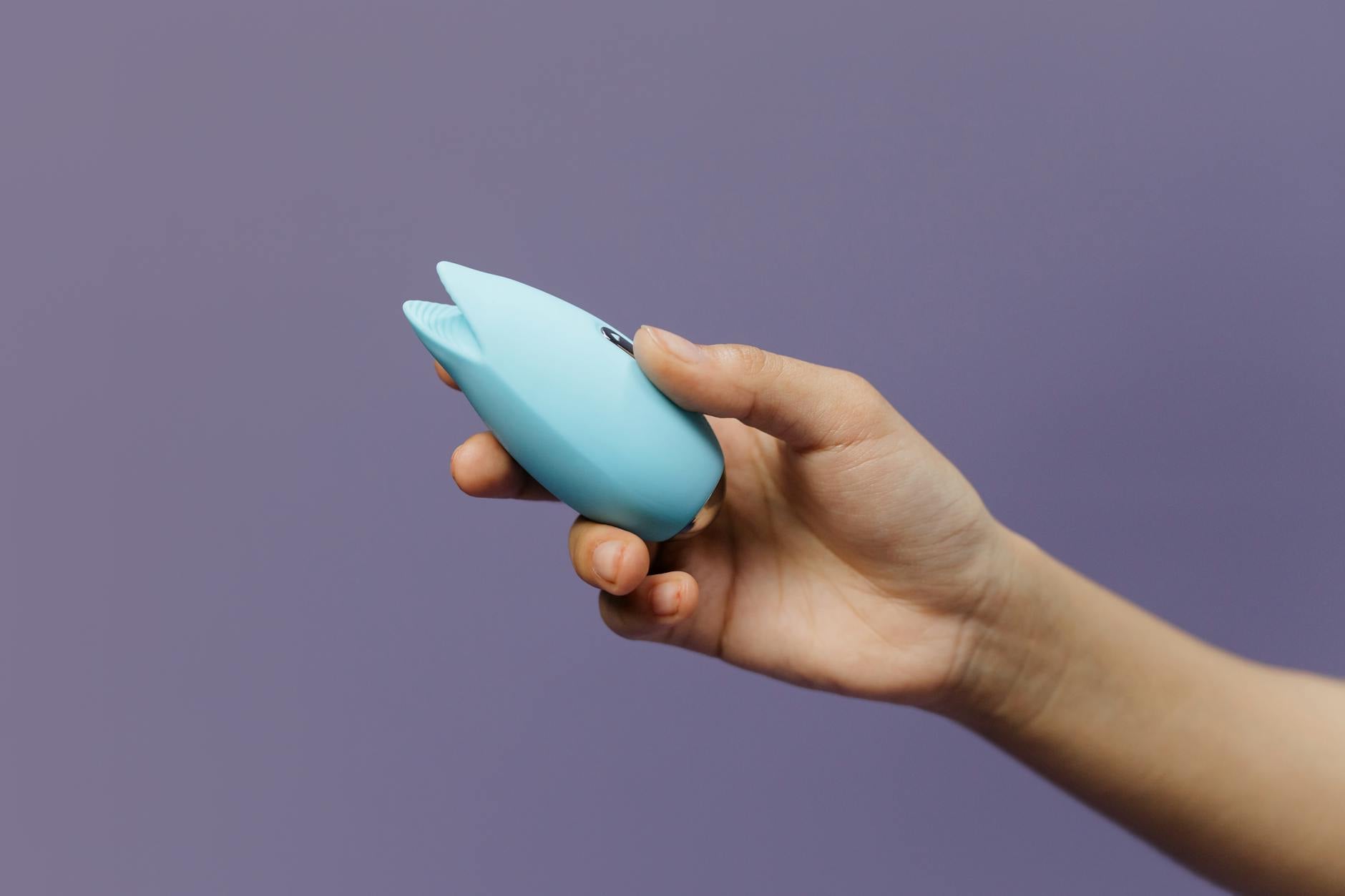
Photo by cottonbro studio on Pexels
Specific patterns for synchronized pleasure
Once you're comfortable, try this structure: the slower partner uses the lemon vibrator on themselves while the faster partner touches them elsewhere. Not genitally yet. Neck, thighs, chest, hands. The faster partner is still engaging physically, still present, still part of it. But they're not driving the sexual tempo anymore.
This accomplishes three things. First, the slower partner gets sustained stimulation without pressure to rush. Second, the faster partner has something active to do instead of waiting. Third, you're both building arousal together, just on the slower person's timeline.
After about 10-15 minutes of this (the slower partner will tell you when), move into more direct touch if you both want to. But here's the key: the lemon vibrator doesn't stop. It stays in play. The slower partner is now experiencing dual sensation, and the faster partner has a visual guide for what feels good.
Managing the mental side
The faster partner might feel impatient. That's normal. But impatience is just a thought. The antidote is engagement. Watch your partner's face. Notice what patterns make them move differently. Ask them what feels good. Make it about connection instead of speed.
For the slower partner, there's often shame. "Why do I need so much time?" The answer is: you don't need anything. Your nervous system has a rhythm. That's not a flaw. A lemon clitoral vibrator actually helps here because it's not your partner's touch creating the sensation. It's a neutral third thing. That can sometimes make it easier to relax into pleasure without the psychological weight of "am I making this take too long?"
When you're feeling stuck, how to use a lemon vibrator when desire feels disconnected from physical touch walks through reconnecting sensation and emotion, which often underlies pace mismatches.
What actually changes over time
Here's what I've seen in my practice. After a few weeks of this intentional, paced approach, something shifts. The slower partner stops feeling rushed because they're not anymore. The faster partner stops feeling impatient because they're genuinely engaged in watching pleasure build. And both of them? They start understanding each other's arousal as information, not as a problem to solve.
You might find that your "natural" paces weren't actually natural. They were adaptive. The faster person was rushing to avoid discomfort with slowness. The slower person was speeding up to avoid feeling like a burden. With the pressure off, both rhythms often normalize.
Also, a lemon vibrator stays consistent. It doesn't get tired or frustrated. That reliability actually creates safety, which lets the slower partner relax even more.
When slow becomes the preference
Some couples find that once they've given themselves permission to move slowly, neither partner wants to go back. Slow intimacy isn't boring. It's actually more intense because you're paying attention. Every touch registers differently. Orgasms often feel deeper.
If you're rebuilding connection after time apart, slow is often exactly what you need. How to use a lemon vibrator when rebuilding intimacy with your partner after time apart covers this more directly, but the principle is the same: a lemon clitoral vibrator gives you a shared object of focus while you both relearn each other's bodies.
The lemon vibrator itself is just a tool. The real shift is in the agreement: "We're doing this together, on whoever's slower timeline, and that's not a compromise. That's the plan." That permission changes everything.
FAQ
Can we use a lemon vibrator if I'm the faster partner?
Absolutely. The slower partner uses it on themselves while you touch them elsewhere or even while you're inside them, depending on what works for your bodies. You're still active and connected. You're just not the only source of stimulation anymore, which takes the pressure off your body to "perform" at a certain pace.
What if my partner thinks wanting to go slowly means something's wrong with them?
Slowness isn't a dysfunction. It's a preference or sometimes a nervous system response to stress. A clitoral vibrator can help reframe this because they're experiencing pleasure independently. It's not about their partner waiting anymore. It's about mutual pleasure on different timelines, which is completely normal.
How long should we spend in the "clothed with the lemon vibrator" phase?
As long as it feels good. Could be one session, could be five. There's no timeline. When the slower partner (and the faster partner, if they want) feels ready to move into more direct contact, you just move. But don't rush the comfort phase. That's where the real rewiring happens.
Does using a lemon clitoral vibrator as a couple change what it's like to use one solo?
Many people find it adds dimension to solo play. They've experienced it in a partnered context, so using it alone often feels less isolating or performative. But it can also go the other way. Some people prefer keeping their solo and partnered play separate. Both are fine.
What if we're still not on the same page about pace even with a toy?
Sometimes pace mismatch points to something deeper: one partner avoiding emotional intimacy, one partner dealing with trauma, or fundamental lifestyle incompatibility (one wants quickies, one wants hour-long sessions). A vibrator is a tool, not a fix for that. If you're stuck, talking to a relationship therapist can help you figure out what's actually driving the speed difference.
Is a lemon vibrator better than other toys for couples with pace issues?
Lemon clitoral vibrators and other suction toys work well because the sensation is localized and consistent. But any toy that feels good to the slower partner will work. The tool matters less than the agreement around it: we're doing this together, on this timeline, because your pleasure matters.
The bottom line
Mismatched pace feels like a rhythm problem. It's actually a presence problem. When one partner is waiting, they're not present. When the other is rushing, they're not present either. A lemon vibrator syncs you back up because it gives both of you something present to do together. You're not waiting. You're not performing. You're just building pleasure in parallel.
That shift, from fighting your natural rhythms to honoring them both, changes everything. Your bodies relax. Your connection deepens. And that's when the really good stuff happens.