
Let's name the actual problem
You want to use a lemon vibrator. Your partner thinks it means they're not enough. These two things feel incompatible, which is why the conversation hasn't happened, or why it happened badly. Here's the thing: they're not actually incompatible. They're just two different sentences that need to be said separately.
Most of this friction comes from a single misunderstanding. Your partner thinks toys are about replacement. You're thinking about addition. You're both right about what you're afraid of. Neither of you is wrong. You just haven't translated yet.
The core reframe that changes everything
Before you bring a lemon vibrator into the room, you need to separate three conversations that your partner's brain is currently squishing together.
Conversation One: "I want to explore my pleasure more." This is about you, not about them.
Conversation Two: "I still want you." This is the reassurance they need, and it's separate from One.
Conversation Three: "I'd like to try a toy together sometimes." This is the ask, and it only lands after One and Two are clear.
Most people start with Three and wonder why their partner shuts down. Of course they do. They heard "I'm not satisfied" and "I want something you can't give me" before they heard "and I still love you." The order matters wildly.
Why your partner might actually be resistant
Understand this first: resistance to toys is rarely about the toy. It's about what the toy represents in your partner's internal narrative. Usually one of these five things.
Insecurity. They think toys mean you don't want them anymore. This is the most common one, and it's the most solvable.
Shame or exposure. They grew up thinking toys were dirty or weird. Introducing one feels like you're pushing them toward something that conflicts with their values. That's a real conversation, not a dismissal.
Control. Some partners resist because toys feel like a loss of power in the bedroom. If they can't give you an orgasm alone, they feel diminished. This is ego, yes, but it's also about security.
Practical awkwardness. They don't know what to do with a toy in the room. It feels foreign, and they're afraid of doing it wrong or hurting you.
Grief. Less common, but real: sometimes a partner resists because they're grieving the sex life they thought they'd have, or they're worried about what it means about their own desires.
Which one is yours? That determines your move. You can't use the same language for all five.
How to actually start the conversation
Pick a moment that isn't a moment. Not in bed, not when you're turning down sex, not when you're frustrated. Pick a regular Tuesday over coffee or while you're doing dishes. Soft context matters.
Start with this: "I want to talk about something I've been thinking about, and I want to be really clear about what I'm saying and what I'm not saying."
Then: "First thing: I still want you. I still think you're attractive. That's not changing. I'm not saying this because I'm bored or because you're not enough."
Wait for them to actually hear that. Don't rush.
Then: "Second thing: I want to explore my own pleasure more. That's about me getting to know my body better, not about you failing at something. Does that make sense?"
Then, and only then: "And because of those two things, I'm curious about trying toys sometimes. Together, with you. I'm not thinking about this without you."
The order is: reassurance, context about you, the actual ask. This isn't manipulation. It's clarity.
If your partner says no
Here's what doesn't work: pressure, guilt, or bringing it up again in two weeks.
What works: "I hear you. I'm not going to push this. But I'm also not going to pretend I don't want it. So let's come back to this in a few months and see if anything shifts."
Then actually let it go. Don't sulk. Don't bring it up sideways. Don't punish them with resentment. The weird part is that when you actually mean it, when you're not secretly angry that they said no, many partners come back three months later and say, "So about that thing you mentioned."
They need time to sit with it. They need to understand that you're not leaving. They need to feel safe.
If they never come around, that's also information. You get to decide what that means for you. But that's a different conversation, and an honest one, not a resentment that eats your sex life slowly.
If your partner says yes but seems nervous
Start without the toy in the room. Talk about what pleasure looks like for them. Ask what they're worried about. Listen without defending.
When you do introduce a lemon vibrator, introduce it as a prop in your mutual exploration, not as a replacement for them. "I want to try this with you, and I want to know what feels good."
Let them hold it first if they want. Let them control it. Let them decide when to use it and when to stop. The clitoral suction toys like the Lem work beautifully for shared pleasure because the sensation is concentrated and specific. Your partner can see what's happening. It's not mysterious.
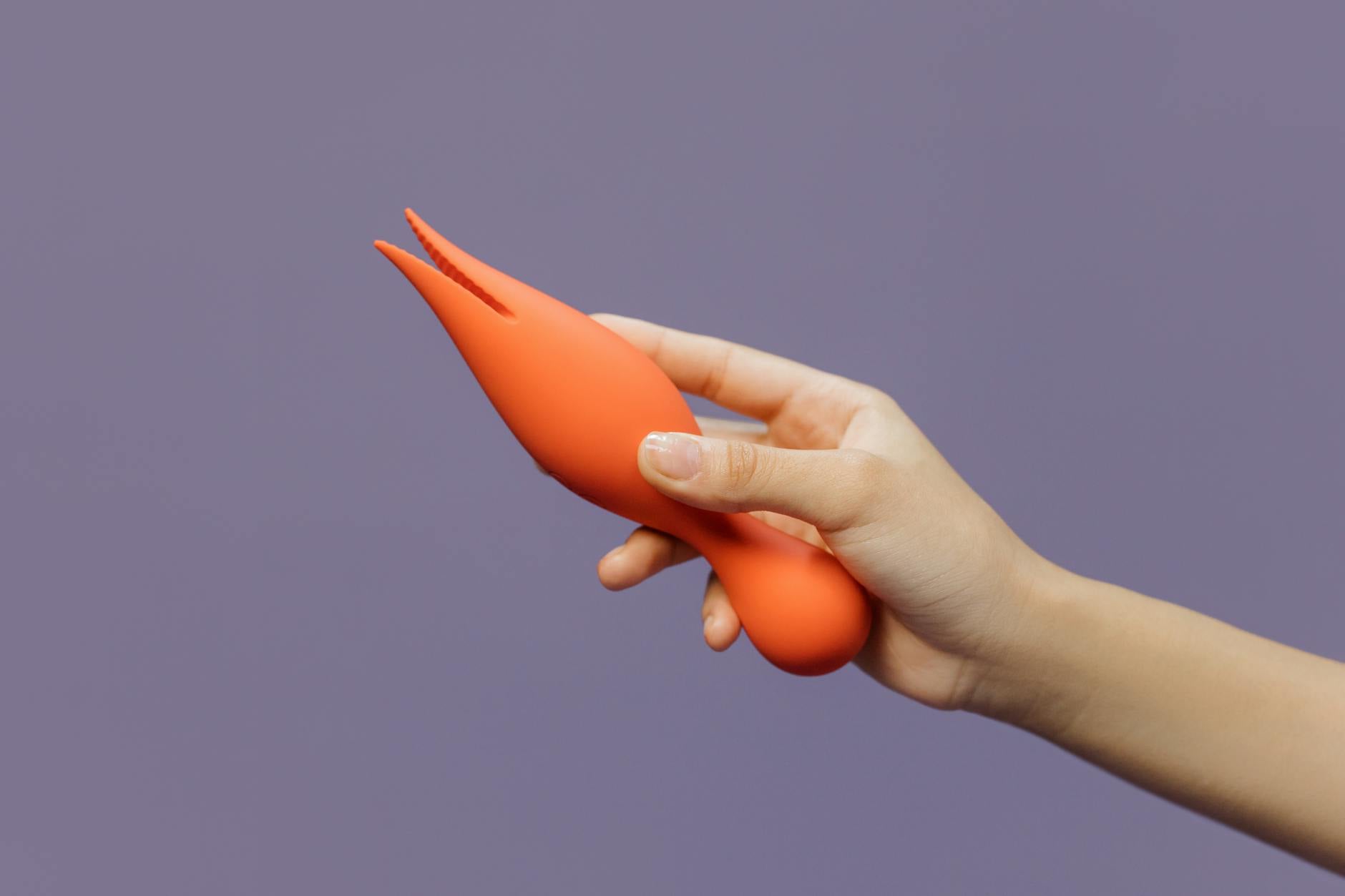
Photo by cottonbro studio on Pexels
Start at the lowest setting. Let your partner watch your face. Tell them what feels good. Ask them to try different patterns with you. This isn't about getting you off fastest. It's about them understanding that toys enhance pleasure together, not replace them.
The long-term play
Once your partner understands that toys aren't about replacement, many people come around to enjoying them together. Some even start wanting to use them themselves. That's not the point, but it's a nice side effect.
The real win is that you've had an honest conversation about pleasure without shame. That foundation is what good sex is built on. The toy is just a tool.
If you've tried everything here and your partner is still absolutely resistant, that's worth exploring with a couples therapist, especially if you find yourself resenting them over it. Resentment kills desire faster than anything else. Sometimes you need a neutral third person to help translate what's actually being said.
FAQ: The stuff you're actually wondering
What if my partner thinks I want to use a lemon vibrator because they can't satisfy me?
This is the most common fear. It means you have to be really specific about what satisfaction means. "Pleasure" and "satisfaction with you" are not the same thing. You can be fully satisfied in a relationship and still want to explore your body. People explore masturbation solo all the time. A toy is just a different version of that. The shift is inviting them in, not shutting them out.
Is it better to introduce a lemon vibrator gradually or all at once?
Gradually, if your partner is nervous. Talk about it, then let time sit between the conversation and the experience. Don't surprise them with a toy during sex. That's a trust break, not a fun twist. When you do use it, start in a low-pressure context where it's clear this is exploration, not performance.
Should I use the lemon vibrator solo first or wait until we're together?
This depends on your partner's specific worry. If they're worried about pleasure and intimacy, using it together first makes sense. If they're worried about you finding it enough on your own, using it solo might actually confirm that fear. Read your partner. You know them. What would feel like reassurance versus threat?
What if my partner wants to use a lemon vibrator on themselves and it makes me uncomfortable?
Now you're in the same boat they were in. That's not a bad thing. It's an opportunity to have the same conversation in reverse. What's the discomfort actually about? Insecurity? Exclusion? That's worth naming and working through together.
Can a lemon clitoral vibrator actually improve our sex life if my partner is resistant?
Not if your partner is still resistant. A toy doesn't fix the communication gap. In fact, it highlights it. The real work is the conversation. The toy is just what happens after you've figured out how to talk about desire, fear, and change without one person feeling threatened.
How do I know if we should see a couples therapist about this?
If you've had the conversation, your partner understands what you're saying, and you're still stuck in the same place after a few months, that's when a therapist helps. Not because anything is wrong with you or your partner, but because sometimes neutral ground makes these conversations easier. Especially if this feels like a sign of a bigger intimacy gap.
The thing about toys and partnerships
Honestly, the lemon vibrator isn't really about the toy. It's about whether you can be honest with each other about desire without shame or defensiveness. Toys just make that visible. If you can navigate this conversation well, you can navigate almost anything else that comes up.
Start with reassurance. Be clear about what you want and why. Give your partner time. And remember: you both get to have boundaries. This isn't about convincing them. It's about finding out if you want the same things. Sometimes you do. Sometimes you discover you need different paths forward. Both are okay.
When you're ready to explore together, Nancyslem Shop offers lemon vibrators designed for shared pleasure. But the tool only matters if the conversation is solid first. Do that work first. The rest follows naturally.