How to Use a Lemon Vibrator When You Want Orgasms But Struggle With Speed of Arousal
The honest part about slow arousal
Let's be real. You want to want it faster. You want your body to cooperate on a tighter timeline. You watch partners or read accounts online of people getting there in 10 minutes flat, and somewhere in your brain, you've decided your arousal is the problem rather than just different.
Here's what I need to say clearly: slow arousal is not a malfunction. It's your baseline. And the moment you stop fighting it, a lemon vibrator becomes dramatically more useful.
I'm Evelyn Granieri, a marriage and family therapist, and in my practice I see this pattern constantly. People come in convinced their arousal is broken when what's actually happening is they're measuring it against someone else's timeline or against an invented standard. The friction isn't in the body. It's in the expectation.
What slow arousal actually is
Arousal is a neurological and physiological cascade. It's not like a light switch. For some people, it's a dimmer that moves gradually from off to full brightness over 20 to 40 minutes. For others, it's a switch that flips fast. Neither is more correct. Both are normal.
Slow arousal patterns tend to run in families, correlate with certain personality traits (conscientiousness, introspection), and shift predictably across the menstrual cycle. It's often more pronounced in people who have high baseline stress, who are processing a lot cognitively, or who have experienced relationship trauma. It also becomes more common as we age, which is actually useful information because it reframes slow arousal not as deterioration but as a different operating system entirely.
Here's the critical part: slow arousal does not mean weak arousal. You can take 30 minutes to build and then experience intense, full-body orgasms. Speed and intensity are completely separate variables.
Why the pressure to speed up actually slows you down
This is where relationships come in. If you or a partner believes that your slow arousal is a problem to solve, you unconsciously add performance pressure. You rush the buildup. You skip foreplay because you're thinking "this isn't working yet, I should try something else." You disconnect from sensation because you're monitoring progress instead of experiencing it.
That's the opposite of what slow arousal needs. Slow arousal requires patience, sustained attention, and permission to take the full timeline without judgment.
I often tell couples: speed is something you inherit, not something you achieve through effort. If you're naturally slow to arouse, no amount of willpower changes that. What changes is your relationship to the timeline itself.
The lemon vibrator as a reset tool
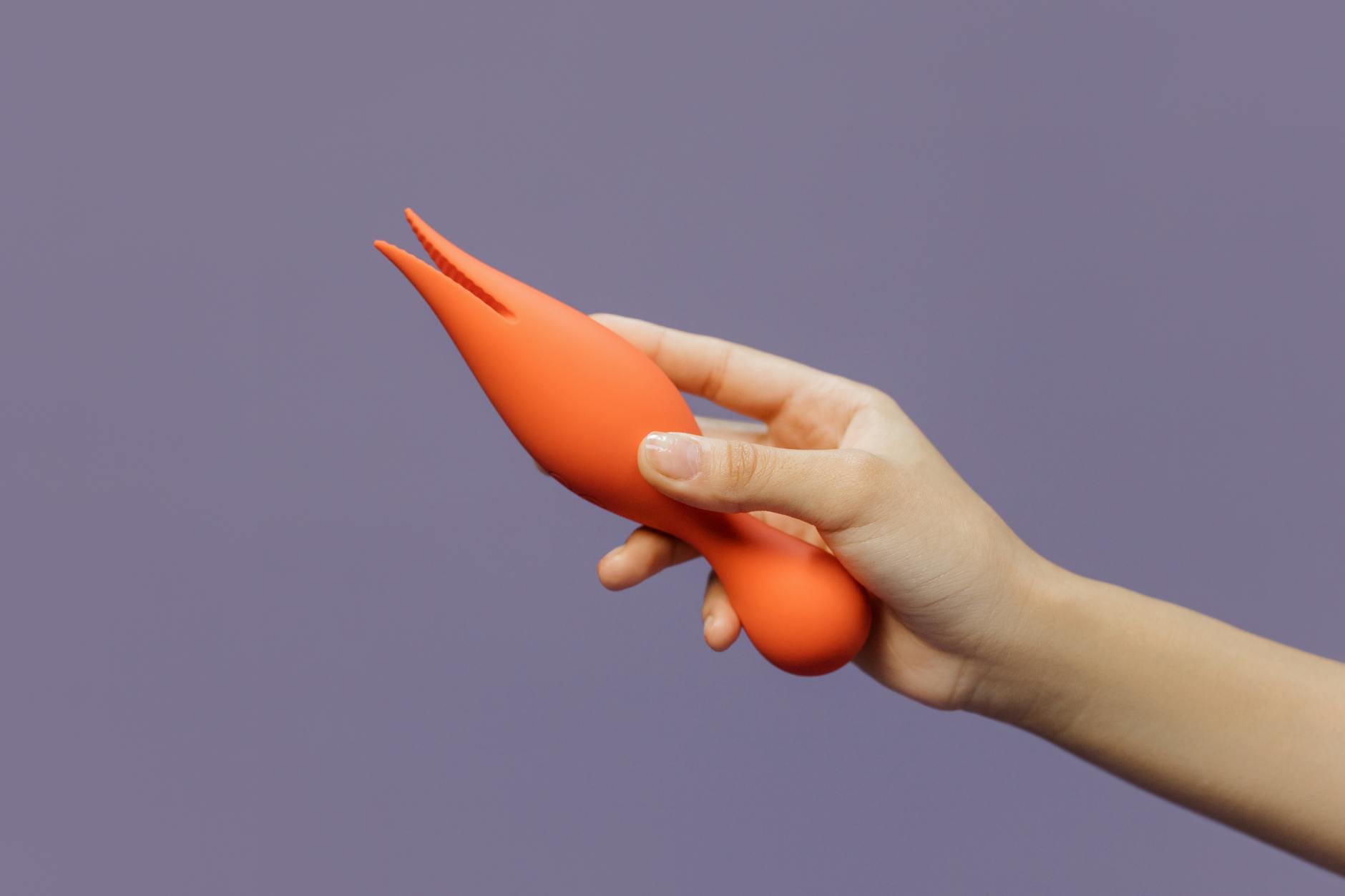
This is where a lemon clitoral vibrator, and specifically the suction-based pattern of tools like the Lem, becomes genuinely useful. Here's why.
Traditional vibration requires you to wait for arousal to build enough that direct stimulation feels good rather than harsh. With slow arousal, that's a long waiting period, which means you're lying there thinking "is this working yet," which is exactly the opposite of present.
A lemon sucker like the Lem works differently. The suction pattern stimulates the clitoral nerve network without the same intensity threshold. You can turn it on earlier in your arousal cycle and it won't feel overwhelming. You start at a lower pattern, stay with it, let your body respond at its own pace, and gradually work up as arousal naturally builds.
This is a game-changer for slow arousal specifically because it removes the false binary of "nothing's happening" or "okay now I need to jump to high intensity." The lemon clitoral vibrator becomes the tool that matches your pace rather than the tool that forces a faster pace.
How to actually use it when arousal is slow
Four practical adjustments:
1. Start earlier than you think you should. Don't wait until you feel clearly aroused. Turn on the Lem or your chosen lemon vibrator at a low pattern (1 or 2) while you're still in what feels like neutral territory. Let it work while your mind and body gradually tune in. This removes the "prove it's working" pressure.
2. Combine it with something that occupies your thinking brain. Slow arousal is often complicated by intrusive thoughts. You're thinking about your to-do list, how you look, whether this is working. Pairing clitoral stimulation with something that genuinely interests you (audio erotica, fantasy, a partner's touch elsewhere on your body) gives your thinking brain permission to settle while your body responds.
3. Time block without timing. Tell yourself "I have 45 minutes," not "I need to finish by 9 p.m." This sounds subtle but it's massive. Knowing you have a full container of time lets your nervous system relax. Knowing you're racing the clock creates urgency that works against slow arousal.
4. Expect the arousal arc to feel different. With external stimulation from a lemon vibrator, arousal doesn't always feel like a continuous climb. You might feel it plateau, dip slightly, and climb again. That's normal. Don't interpret a plateau as "it's not working." It's just your body's natural rhythm.
The partner conversation that has to happen
If you have a partner, the single most useful thing you can do is separate the conversation about your arousal timeline from everything else. "My body takes time to warm up" is information about your physiology. It's not information about desire, about attraction, about how much you want your partner.
Many couples conflate slow arousal with low desire. "If you really wanted me, you'd be ready faster." That's a logical fallacy and it's deeply harmful. Someone can desire their partner intensely and still require 30 minutes of sustained foreplay before arousal peaks. The two are not inversely related.
A lemon vibrator actually helps here because it becomes a shared tool. Instead of a partner waiting for you to "catch up" while you feel pressure to perform, you're both actively engaged in your pleasure. Your partner sees the Lem working and understands it's not a criticism of them. It's a pace adjustment.
When to escalate, when to stay
One misconception about slow arousal: you should eventually move to something "stronger." Not necessarily. Some people with slow arousal cycles find that sustained mid-level stimulation (pattern 3-4 on a lemon sucker) for 20-30 minutes delivers better orgasms than chasing increasingly intense patterns.
Pay attention to what your body tells you. If you're feeling good at pattern 2, stay there. Let arousal build. The goal is not to reach maximum intensity. The goal is to reach orgasm in a way that feels good for you.
This is also why consistency matters. If you know you need 30 minutes and you try a 10-minute session once and declare it didn't work, you're measuring against the wrong standard. Give yourself three or four full sessions with your lemon vibrator before you evaluate what's working.
The reality of pleasure and time
Honestly, the thing I see shift most when people stop fighting their arousal timeline is permission. Permission to take up time. Permission to want something that requires patience. Permission for your partner to wait, to be present, to be interested in your pleasure rather than frustrated by its pace.
A lemon clitoral vibrator doesn't speed up your arousal. What it does is make the time feel active rather than like you're waiting for something to happen. It gives you agency within your own slow pace.
That's not settling. That's working with your actual body instead of against an imagined standard. And that's where real, sustained pleasure lives.
Frequently asked questions
Why does my arousal take so long when my partner's doesn't?
Arousal speed correlates with hormones, baseline stress levels, relationship dynamics, and neurology. It's partly inherited and partly circumstantial. Your partner's faster timeline isn't the baseline. It's just their baseline. Think of it like metabolism or sleep needs. It varies person to person and that's completely normal.
Can I make myself arouse faster if I use a lemon vibrator regularly?
Not really. What happens with regular use is you become more efficient within your timeline. You recognize arousal cues earlier. You build confidence in your body's process. But the actual speed of the neurological response doesn't typically change much. The shift is in your relationship to the pace, which is actually more valuable.
Is slow arousal a sign something's wrong in my relationship?
Not necessarily. Slow arousal can be a sign of stress, disconnection, or misalignment with a partner. It can also just be your physiology. The way to know is to pay attention: does arousal accelerate when you're with a different partner, or in a different context, or under less stress? If the answer is yes, your slow arousal might have relational roots. If slow is your consistent pattern across contexts, it's likely just how your body works.
How much time should I actually expect to spend using a lemon clitoral vibrator before things start building?
This varies, but if you have slow arousal, budget 5 to 15 minutes before you feel clear physiological shifts. This isn't a failure. It's just the first phase. Many people find the sweet spot is 20 to 40 minutes total from starting the lemon sucker to orgasm, with the last 10 to 15 being the most intense.
Does slow arousal mean I'm less sexual or less orgasmic than other people?
No. Slow arousal is a pacing variable. Orgasmic capacity is separate. You can have slow arousal and extraordinary orgasms. You can have fast arousal and difficulty reaching orgasm. These are independent systems. Your slow arousal says nothing about your sexuality or your capacity for pleasure.
If I use a lemon vibrator, will my arousal eventually get faster?
Unlikely. Tools like the Lem are most useful when you stop expecting them to change your baseline and start using them to optimize within it. The goal isn't to rush your arousal. The goal is to make the time feel present and connected rather than like you're waiting for something to happen.
Slow arousal is not a flaw. It's a different operating system. The moment you accept that, everything shifts. A lemon vibrator becomes useful not because it speeds you up, but because it makes patience feel active. And that changes everything about how pleasure shows up in your life.