
Here's the thing about toys and partnership
When a partner brings up the idea of using a lemon vibrator or any clitoral toy together, the first thing that usually happens in your brain is a small spike of anxiety. Am I not enough? Does this mean something's wrong? Will it feel weird?
I hear this in my practice constantly. And here's what I know after working with hundreds of couples: that anxiety is completely normal and also completely separate from what's actually happening. What's actually happening is your partner is saying, "I want to know more about what feels good for you, and I want to be part of that discovery." That's not a criticism. That's an invitation.
Why partners bring it up now (and why the timing matters)
Most couples don't casually mention toys unless something has shifted. Sometimes it's frustration. Sometimes it's curiosity. Sometimes it's both. The research on couples who use vibrators together is clear: they report higher satisfaction, more communication about pleasure, and better sexual connection overall.
But timing and framing matter. If a partner mentions it during or right after sex when you're both vulnerable, it can land wrong. If it comes up during an argument about frequency or satisfaction, the message gets tangled. The best conversations happen when you're both calm, clothed, and there's no immediate expectation of sex happening. Think: a coffee conversation, not a bedroom moment.

Photo by cottonbro studio on Pexels
The conversation that actually works
If your partner has brought this up, here's what I recommend saying: "I'm interested in this. I also want to understand what you're looking for. Are you wanting this because you think I need it, or because you want to experience it together?"
That question does two things. It shows you're taking them seriously, and it clarifies whether this is about your pleasure, their desire to deepen intimacy, or both. Most of the time it's both.
Then listen. Really listen. The gap between what partners think they want and what they actually want is often enormous. Your partner might say, "I want to see you come harder," when what they really mean is, "I feel like I'm not part of your pleasure enough." Those are different problems with different solutions.
Why the lemon vibrator changes the dynamic
Clitoral suction toys like the Lem vibrator work differently than traditional vibrators. They stimulate a much larger area of nerve tissue, which means sensation is more diffuse and usually takes longer to build. That's actually an advantage in partnered sex.
With a traditional vibrator, partnered sex can sometimes feel like one person is doing their thing while the other watches. With a lemon clitoral vibrator, there's more room for him or her to participate. They can control the intensity, pause to check in, switch hands, or use it in rhythm with penetration. It becomes collaborative instead of solo.
The practical setup that works
First: communication before you start. "I want to try this. I'd love for you to guide it. Tell me what you want to experience." That single sentence changes the entire energy from performance to exploration.
Second: position matters. If you're using a lemon sucker together, spooning or her on top (if penetration is part of this) tends to work better than positions where your partner can't easily see what's happening or reach the toy. You want them involved, not just watching.
Third: lube. Even if you don't usually need it, using it when introducing a toy together sends a message: "This is for me, and we're doing it together." It also makes the sensation feel different, which can reset any weirdness.
Fourth: start low. If the Lem or other lemon sexual toy has intensity settings, start at pattern one. Let your body remember what pleasure feels like with your partner present and involved. You don't need to immediately chase the strongest sensation.
What to do if it feels awkward (it might)
There's a decent chance the first time feels strange. You might feel self-conscious. Your partner might feel uncertain about how hard to press or which pattern to use. Your arousal might stall because you're both thinking instead of feeling.
This is completely normal. It's not a failure. It's data.
After you finish (or stop), have a real conversation. Not "That was great," unless it actually was. But "I felt a bit vulnerable at first" or "I wasn't sure how hard to use it" or "I loved when you did X." Those specifics help both of you show up better next time.
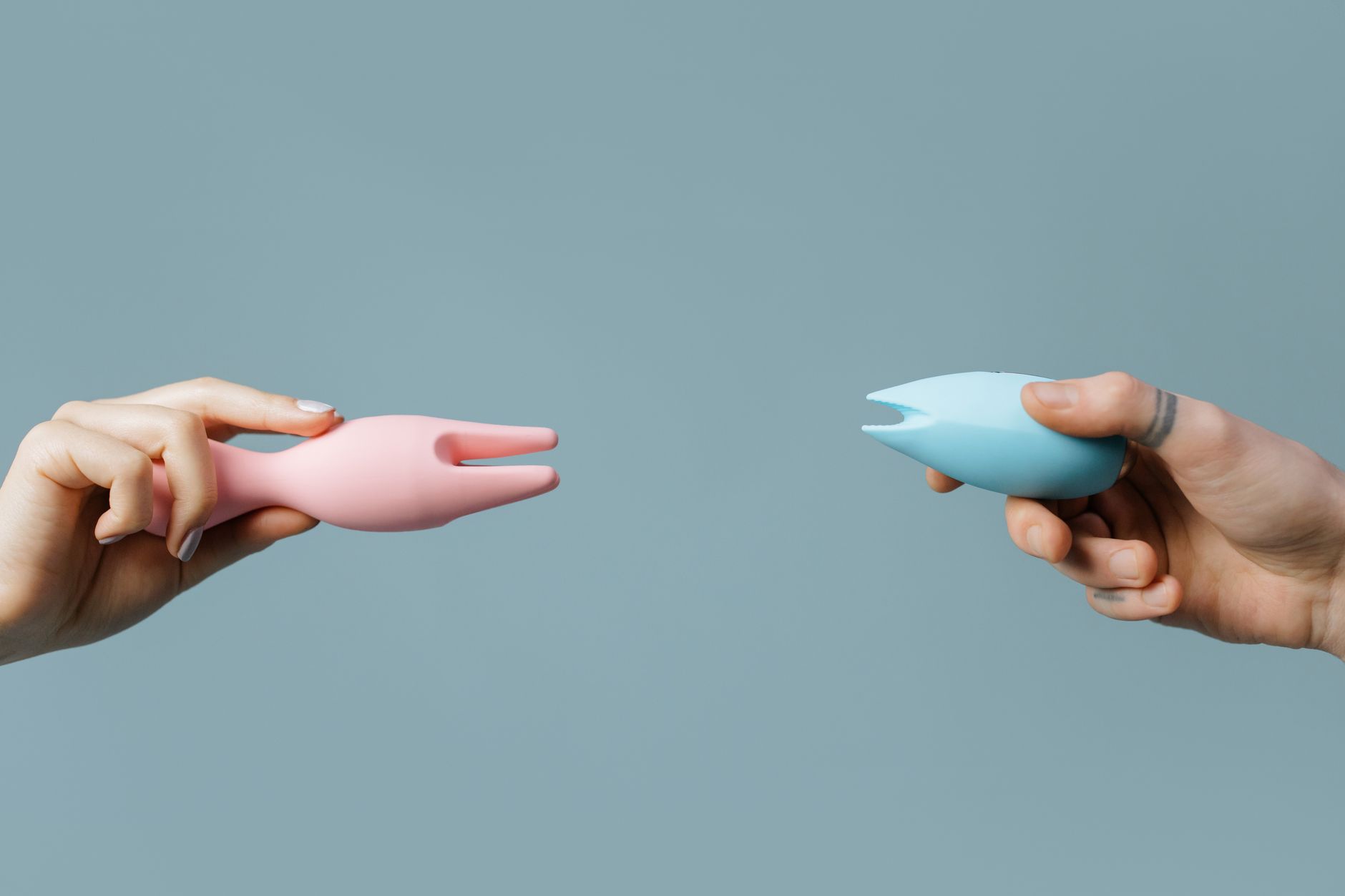
Photo by cottonbro studio on Pexels
The pleasure research no one talks about
Here's something that might surprise you: women who use clitoral vibrators with partners experience more frequent and more intense orgasms than women who use them alone or who don't use them at all. But that benefit only shows up if the partner is actively engaged, not just tolerating it.
Engagement means asking what feels good. It means adjusting based on your responses. It means understanding that pleasure is not a solo sport. When partners approach a lemon clitoral vibrator with curiosity instead of threat, the experience transforms.
If you're nervous about dependency
A lot of people worry that using a toy will make them unable to orgasm without it. The research doesn't support that. What does happen is your nervous system learns what intense pleasure feels like, and sometimes other forms of stimulation feel mild by comparison. That's not dependency. That's just knowing your own body better.
You can still orgasm without the toy. You might find you prefer partnered stimulation with the toy. Both are fine. Both are normal.
Setting boundaries that actually feel good
If your partner wants to use the lemon vibrator but you're not ready, say that clearly. "I'm interested, but not yet" is a complete sentence. If you want to try it alone first before bringing them into it, that's reasonable too. You control the pace.
But also be honest about what's actually a boundary ("I'm not comfortable with this") versus what's just discomfort ("This feels weird right now"). Discomfort often dissolves with a little time and communication. Actual boundaries shouldn't.
Moving forward together
Introducing a lemon sexual toy into partnered sex is not about fixing anything. It's about both of you saying, "Your pleasure matters, and I want to be part of discovering what works for you." That conversation and that willingness to explore together is the real gift. The toy is just the vehicle.
Start the conversation outside the bedroom. Be specific about what your partner is actually looking for. Choose a tool like the Lem vibrator that creates space for both of you to participate. Take your time with it. And remember: this is about expanding what you already have, not replacing what works.
Your partner's interest in exploring together is worth taking seriously. And your pleasure deserves that kind of attention.
People also ask
Can you use a lemon vibrator during penetrative sex with a partner?
Absolutely. In fact, many people find clitoral stimulation during penetration intensifies both sensations. Spooning, her-on-top, or facing positions work best because your partner can easily control the toy and you both stay connected. Start slow, use plenty of lube, and communicate about what feels good as you go.
What if my partner feels threatened by a toy?
That usually comes from a misunderstanding about what the toy means. It doesn't mean you want sex with something instead of someone. It means you want to experience deeper pleasure, and you're inviting him or her into that experience. Have the conversation I described above. Sometimes just understanding that the toy is about adding to partnered sex, not replacing it, shifts everything.
Is it normal for it to feel awkward the first time?
Completely. You're introducing something new while also being vulnerable with someone else. That's a lot of variables. The awkwardness usually fades by the second or third time. Focus less on performance and more on discovery. What feels different? What did your partner enjoy watching? Where did sensation surprise you? Those conversations matter more than how it looks in the moment.
How do I bring this up if my partner hasn't mentioned it first?
Same approach: calm setting, not during sex or conflict. "I've been curious about exploring pleasure more, and I'd love for you to be part of that. How would you feel about that?" You're not asking permission. You're extending an invitation. Their response tells you a lot about how open they are to this kind of exploration together.
Should we use a lemon clitoral vibrator or a different kind of toy?
Clitoral suction toys like the Lem vibrator tend to work well for couples because they're less intense than traditional vibrators, which means there's more room for your partner to participate and adjust. They also simulate the way many people's hands naturally work, so they feel less foreign. That said, some couples prefer traditional vibrators. Start with what feels most intuitive, and adjust based on what you both experience.
What if one of us orgasms much faster than the other?
This is actually where a lemon vibrator shines. You can use it to help the slower partner catch up, or to extend pleasure for the faster one. It creates a tool for synchronizing rather than a source of frustration. The key is treating it as a problem to solve together, not a referendum on either of you.