
Let's name the real problem first
Your partner thinks toys mean they're not enough. That's the fear underneath. Whether they say it directly or just clam up when you mention the Lem, the subtext is the same: if you need a lemon clitoral vibrator, something is wrong with me. Or with us. And so you end up choosing between your pleasure and their comfort. That's not a choice. That's a trap.
Here's what I see repeatedly in my practice: most partners aren't actually opposed to toys. They're opposed to the story they've told themselves about what toys mean. Separating those two things is where everything shifts.
Why partners resist (and it's usually not what you think)
Most men I talk to aren't worried that a lem vibrator is "better" than they are. They're worried it's a referendum on whether they are. That's different, and it matters.
The fear breaks down into three buckets:
Performance anxiety. Your partner equates your pleasure with their skill. A lemon vibrator feels like evidence they're failing. The suction technology works so efficiently that it feels like an indictment. It's not rational, but it's real.
Vulnerability avoidance. Toys make the vulnerability of sex more visible. Your pleasure becomes undeniable, which means their impact on it becomes undeniable too. Some partners find that threatening because it removes the comfortable fiction that sex is always working.
Cultural baggage. Lots of people grew up hearing that "real" sex doesn't need props. Toys are for women who can't orgasm naturally, or couples whose relationships are broken. Your partner might not consciously believe that anymore, but it's still rattling around in the back of their head.
None of these are actually about the lemon vibrator itself. They're about identity, fear of inadequacy, and inherited shame. Which means they're not going to be solved by explaining clitoral suction technology.
The conversation that actually works
Start here: "I want to use a toy during sex because it helps me feel good. This isn't about you. It's about me learning what I like."
Notice what that does. It removes you from the equation as the problem to be solved. You're not asking them to be better. You're saying you're curious about your own body. That's the truth, and it's also the most disarming frame.
Then add: "I want you there while I use it. Not somewhere else, not as a last resort. During. With me."
That's the pivot. The Lem isn't a replacement. It's an expansion. You're inviting them into a different kind of intimacy, not shutting them out to be alone with your lemon clitoral vibrator.
Some partners still resist. When that happens, get specific about what you need: "I've noticed my body responds better to clitoral stimulation with suction. That's not a critique of what we do. It's just information about my body. I'm going to explore this, and I'd love to have you involved. But I'm going to explore it either way."
That last sentence is the one that matters. You're not asking permission. You're stating a boundary.
Practical ways to ease them in
If resistance softens but lingers, try this progression:
Week one: solo familiarity. Use the lemon vibrator on your own, in private. Get to know it. Get comfortable with the sensation and the rhythm. When you're confident with the device, the experience feels less foreign.
Week two: parallel play. During partnered sex, use it on yourself while they're present but not directly involved. Maybe they're inside you, or you're focusing on foreplay together, and then you add the Lem when you want focused clitoral work. No explanation needed. Just normalize it.
Week three: collaboration. Ask them to hold it, or to watch you use it, or to talk you through it. Giving them an active role transforms it from a replacement into a shared experience.
Week four: integration. By now, the lemon vibrator is just part of what you do. It's not a big deal. That's the goal.
Some partners jump straight to week four. Some take months. Some never fully get comfortable. That's information too.
When resistance turns into a real problem
There's a difference between "my partner is nervous about toys" and "my partner is controlling my body." Here's the line:
Nervousness sounds like: "I feel weird about this. Can we talk about it?"
Control sounds like: "I don't want you using that. End of discussion."
One is a feeling you can work with. The other is a boundary being violated. If your partner insists you can't explore your own pleasure, that's not about the Lem. That's about the relationship. And that's worth thinking hard about.
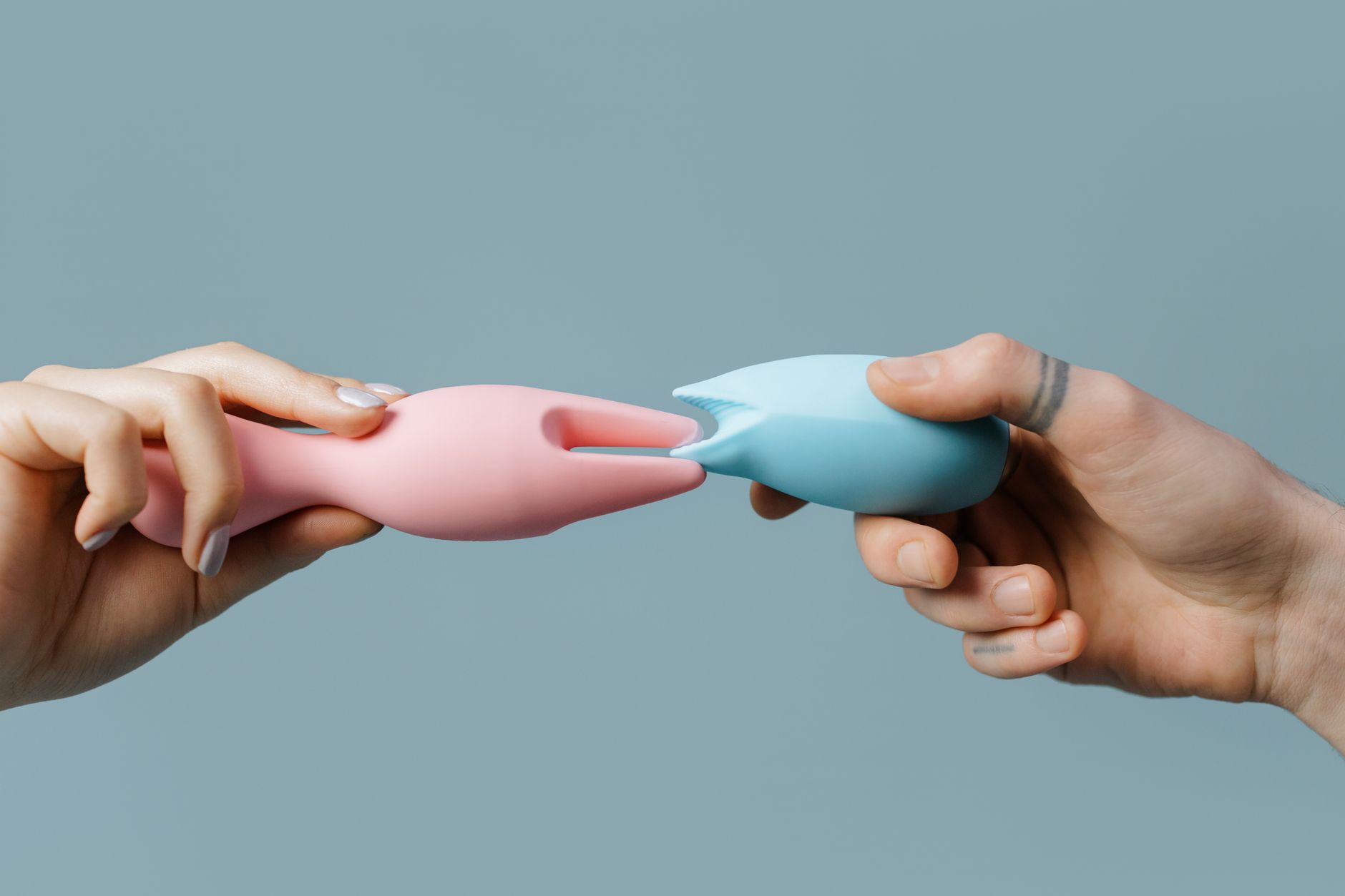
Photo by cottonbro studio on Pexels
The frame that changes everything
Here's what I tell couples: your partner's discomfort isn't about the tool. It's about the intimacy. Using a lemon clitoral vibrator together is actually an opportunity to get closer, not further apart. But only if you frame it that way.
Instead of "I need this because you're not enough," try: "I want to feel more alive during sex, and I want you to see me feel that alive. That turns me on more."
Instead of "Stop being insecure," try: "I chose to share this with you because I trust you. I want you inside this part of my world."
Language matters because it either confirms the fear or dissolves it. You get to choose which.
What to do if they flat-out refuse
Look. You can't have a partner around while you prioritize your pleasure more than they prioritize your pleasure. That's not compatible. Some people will eventually get there. Some won't.
If your partner refuses to even consider that your body deserves exploration, you have a bigger decision than whether to use a lemon vibrator. You have a decision about whether you're willing to live smaller than you want to. That's genuinely hard. But it's also genuinely yours to make.
Plenty of people use the Lem alone. Lots of people find partners who think it's hot. Some relationships adjust and get richer for it. Some don't, and that's information you need.
The bigger picture
Your pleasure matters. Full stop. Not as a bonus if your partner is feeling generous. Not if they approve. Not if they think it's sexy. It matters on its own.
A lemon vibrator is a tool to help you access that pleasure more fully. Your partner's feelings about that tool are real, and worth understanding. But they're not more important than your access to your own body.
The best couples I work with aren't the ones who never had tension about toys. They're the ones who used that tension to have a real conversation about who they were and what they needed. Sometimes that conversation brings people closer. Sometimes it clarifies that they want different things. Both are valuable information.
Start with honesty. Add in kindness. Keep your boundary firm. And remember: using a clitoral vibrator isn't a referendum on your relationship. It's a referendum on your self. And that you get to decide on your own.
People also ask
How do I use a lemon vibrator if my partner is in the room but uncomfortable?
Start with communication before you even turn it on. Tell them what's happening, why you're doing it, and what you want from them (presence, participation, or just acceptance). Use the Lem exactly as you would if you were alone. Your confidence and ease matter more than their comfort. If they want to leave the room, that's fine. If they want to stay and observe, that's fine too. The only thing that's not fine is shame. Don't make yourself small because they're anxious.
Can using a lemon vibrator damage my relationship?
Not on its own. But avoiding conversations about pleasure absolutely can. If you resent your partner for making you feel guilty about your own body, or if they resent you for "forcing" toys on them, that resentment will leak into everything. The Lem is just the surface. The real issue is whether you can talk about what you both need. That's what damages relationships.
What if my partner wants to watch me use a lemon clitoral vibrator but I feel shy?
That's normal. Being watched while you're vulnerable is a big ask. You get to say: "I want to build up to that. Let me get comfortable with this first on my own, and then we can explore together." You also get to decide it's never something you're comfortable with. Your boundaries around your own pleasure aren't negotiable. If a partner pressures you to perform in ways that make you uncomfortable, that's a flag.
Is it okay to use a lemon sucker solo if my partner doesn't like it?
Completely okay. Your body is yours. Full stop. Your partner's discomfort about your solo pleasure is their thing to work through, not yours to accommodate. That said, if they're deeply opposed to you using a lemon vibrator alone in your own time, that's a red flag about the relationship more broadly. You deserve autonomy over your own pleasure.
How do I know if my partner's resistance is reasonable vs. controlling?
Reasonable resistance sounds like vulnerability: "I feel threatened by this." Controlling resistance sounds like demands: "You can't use that." With reasonable resistance, you can have a conversation. You can move slowly. You can reassure them. With controlling resistance, no amount of reassurance will work because the issue isn't actually about the toy. It's about control. That's worth paying attention to.
Can a lem vibrator help if my partner and I have stopped having sex?
Sometimes. If you've both stopped having sex because you're disconnected or resentful, adding a lemon clitoral vibrator won't fix the underlying issue. But if you've stopped having sex because the sex you're having isn't satisfying, and you're afraid to ask for what you need, then using a lem vibrator together might open up a conversation that's been waiting to happen. It depends on whether the problem is the sex or the connection. Usually it's both.
Final thought
Using a lemon vibrator when your partner resists it isn't about being stubborn or selfish. It's about refusing to make yourself smaller. The best relationships I see are built on both people fully inhabiting their own pleasure and their own desires. That clarity actually brings people closer, not further apart. You don't need your partner's permission to know your body. But you do deserve a partner who respects that you do.
If you're ready to explore what feels good for you and want to talk through relationship dynamics around pleasure, reach out. I'm here to help you navigate this.