The conversation you haven't had yet
Let's be real. If your partner won't talk about pleasure, won't acknowledge that toys exist, or shuts down the moment sex becomes the topic, you're not alone. This avoidance is one of the most common relationship patterns I see in my therapy practice. And it's fixable.
The silence isn't usually about the vibrator itself. It's about shame, assumptions about what a toy means, or learned messaging that good relationships don't need them. A lemon vibrator from Hello Nancy's Lem Shop, though, can actually become the entry point to a conversation you both desperately want but neither knows how to start.
Why partners avoid the pleasure conversation
There are typically three root causes, and knowing which one applies to your partner changes your approach entirely.
Fear that it means something is wrong. Many people assume that if a partner wants a toy, it signals inadequacy. He's not enough. She doesn't want him anymore. This is almost never true, but the belief runs deep because porn and popular culture have taught people that real desire looks like it happens spontaneously without tools.
Shame about their own desires. Your partner might avoid the conversation because they're terrified of revealing what actually turns them on. If you don't talk about sex, they don't have to risk rejection or judgment for wanting something "weird." Silence feels safer than exposure.
Learned messaging about good relationships. Some people were raised in environments where pleasure itself was barely acknowledged, let alone discussed. Sex was for procreation, not pleasure. Toys were unmentionable. These narratives don't disappear with age. They embed.
None of these reasons is rational, exactly. But all of them are human. Your job isn't to convince your partner they're wrong. It's to create safety.
Using a lemon vibrator as a bridge, not a confrontation
The mistake most people make is turning the vibrator into the argument. "I bought this. I want to try it. Can we talk about it?" This immediately puts the partner on defense because they're interpreting it as a problem being named.
Instead, reframe it as curiosity, not complaint. "I read something interesting about how clitoral vibrators actually work differently than what we thought. I'm curious if we could explore it together." You're not saying anything is broken. You're inviting exploration.
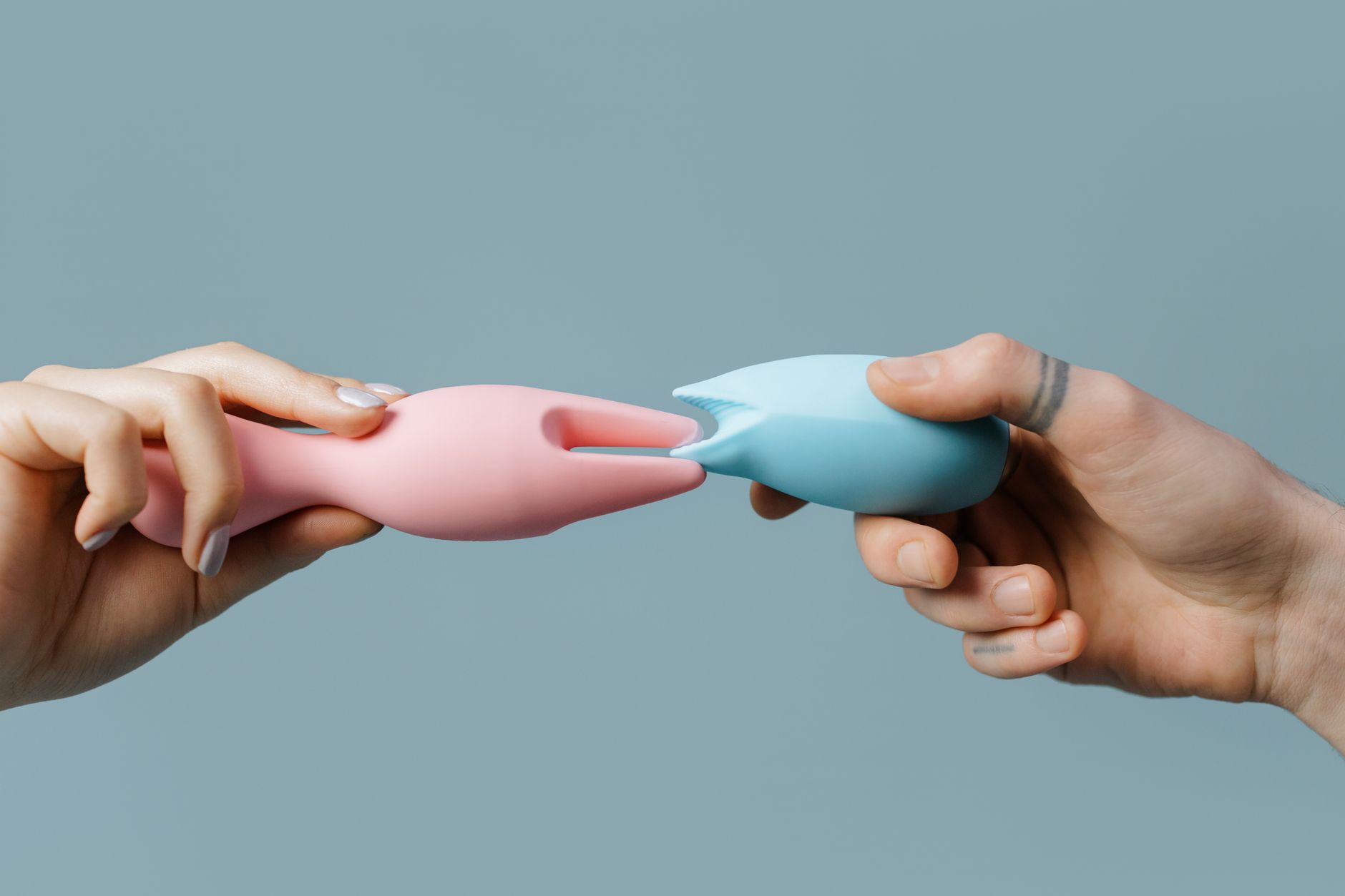
A lemon clitoral vibrator is useful here because it's small enough to feel less intimidating than other toys. It doesn't look like a traditional vibrator. It's discreet enough that it doesn't broadcast "this is a sex toy" the moment it's visible. And physiologically, lemon vibrators use suction and pulsation instead of raw vibration, which feels different enough that it genuinely does warrant curiosity from both partners.
The three-step conversation framework
I use this with couples when pleasure communication has completely stalled.
Step 1: Normalize pleasure as something worth discussing.
This happens outside the bedroom entirely. When you're having coffee or watching a show, casually mention something you read. "I came across this article about how most people have never talked to their partners about what actually feels good. It's wild how much shame is wrapped around pleasure." You're not proposing anything yet. You're just loosening the soil.
Do this three or four times over a week or two. The goal is to make pleasure as normal a topic as, say, what's for dinner.
Step 2: Share information, not a demand.
Once the topic feels slightly less radioactive, introduce specifics. "I learned something about lemon vibrators. They work completely differently than traditional vibrators. They use suction, which actually stimulates different nerve endings." You're providing information, not making a request. You're genuinely curious, not agenda-driven.
If your partner engages with the information, great. Let the conversation breathe. If they shut down, don't push. You've planted the seed.
Step 3: Make it about connection, not the toy.
When the moment feels right (and only you know your partner), connect the vibrator back to the relationship. "I really want us to explore what actually feels good for both of us. I think this could be something we try together, just to see. No pressure. Just curiosity." You're tying the lemon vibrator to intimacy and closeness, not to fixing something broken.
What to do if your partner still resists
Some partners will engage with this framework. Others won't. Not immediately, anyway. Resistance is information, not rejection of you.
If resistance persists, you have three options.
One: Drop it for now and revisit in six months. Sometimes people need time to sit with an idea before they're ready. That's okay.
Two: Suggest couples therapy. If pleasure is off-limits as a conversation topic, it's usually because communication itself is blocked. A good therapist trained in sexual dynamics can help you both feel safer in that discussion. This isn't dramatic. It's practical.
Three: Use the lemon vibrator solo. Your pleasure matters whether or not your partner is ready to discuss it. You don't need permission to explore what feels good to you. And sometimes, when a partner sees that you're getting benefit from something, they become curious.
When you do use it together
If your partner agrees to explore a lemon vibrator with you, start slowly.
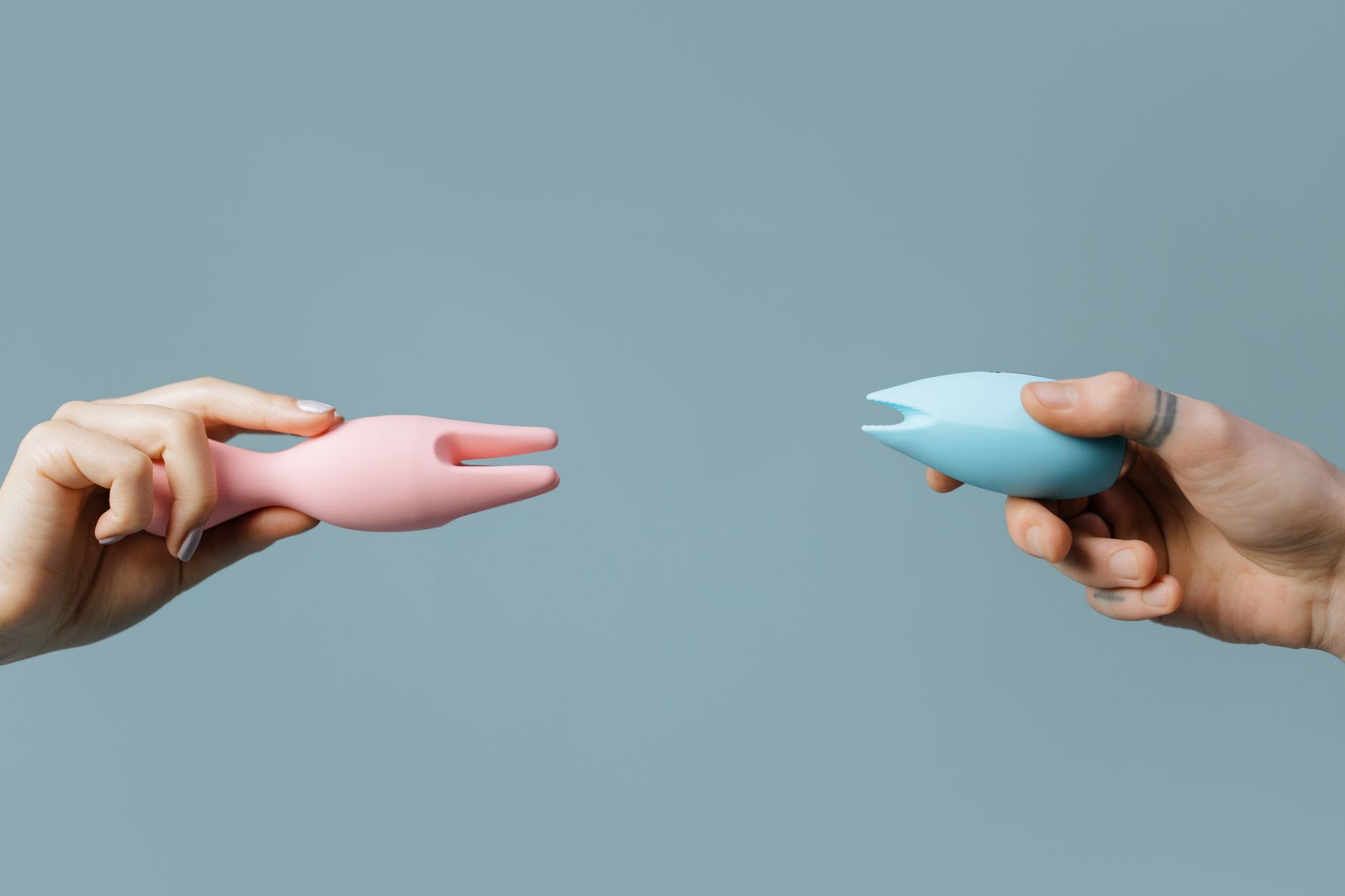
Photo by cottonbro studio on Pexels
Begin with the lowest setting. Lemon clitoral vibrators build intensity, so there's no need to jump straight to the strongest pattern. Let your body adjust. Let the experience feel familiar, not shocking.
Talk during it. Not in a clinical way. Just acknowledge what you're feeling. "That's interesting." "I like this one more." "Can you try a different angle?" The running commentary does two things. It keeps you both present and engaged. And it normalizes the idea that pleasure is something you can discuss in real time, not just awkwardly afterward.
Expect it to feel a little awkward the first time. That's completely normal. You're introducing something new into a dynamic that might be familiar but not necessarily open. Awkwardness doesn't mean something is wrong. It means something is changing.
If desire returns, have another conversation
Sometimes using a lemon vibrator together rekindles a conversation that was stuck. "That felt really good. I had no idea." This is your opening to go deeper. "I'm glad. What did you like about it? What would you want to explore next?"
Your partner might finally be ready to talk about what they actually want. They might share fantasies. They might admit to desires they've been hiding. These conversations don't happen without some catalyst. The lemon vibrator can be that.
Otherwise, if communication remains difficult, know that you've done the work to create safety. You've introduced the idea gently. You've modeled curiosity instead of shame. You can't force your partner to meet you halfway, but you can keep the door open.
FAQ: Navigating pleasure conversations
How do I know if my partner's avoidance is about me or about their own shame?
Assuming it's about their shame until proven otherwise. If they avoid discussing pleasure with you but have shown openness to other vulnerable conversations (emotions, family issues, past hurts), the block is likely internal, not about you. If they avoid all vulnerable conversation, you're dealing with a different relationship dynamic that might benefit from couples work.
What if my partner thinks using a lemon vibrator means I'm not attracted to them anymore?
This fear is common, and it needs to be addressed directly but gently. "I'm attracted to you. And I'm also curious about what feels even better. Those two things aren't in conflict." You might also need to say it more than once. Reassurance isn't one conversation. It's a pattern you establish over time.
Is it better to introduce the idea verbally or by physically showing them a lemon vibrator?
Start verbal. Verbal gives them time to process without pressure. You're not putting an object in their hand and asking for an immediate reaction. Once they've had a few conversations about the idea, showing them the actual toy (like the Lem from Hello Nancy's) is much less jarring.
If we use a lemon clitoral vibrator together once and then they want to pretend it didn't happen, what do I do?
Don't let it become unmentionable. The moment it gets relegated back to silence, the shame comes rushing back in. The next time you're together, casually mention it. "I've been thinking about how that felt. I'd like to do it again." You're normalizing it through repetition, not forcing it through pressure.
Can a lemon vibrator actually make my relationship better if communication is already broken?
No. A vibrator is a tool, not a therapist. If you and your partner can't talk about anything, or if there's resentment, disconnection, or lack of trust, a toy won't fix that. Work on communication first. The vibrator comes after safety exists.
What if we use it and it's just not good? Should we keep trying?
Give it two or three times before deciding. The first time is almost always awkward because you're learning how your bodies respond together. By the third time, you'll have real information about whether this is actually pleasurable for both of you or whether it's just not your thing. And that's fine. Not everything works for everyone.
The real conversation is what comes after
The lemon vibrator isn't the point. It's the excuse. It's the safer way to say "I want us to talk about pleasure. I want us to be closer. I want to know what you actually want." And those conversations, once they start, tend to ripple out. They make other things easier to discuss. They rebuild closeness.
Your partner's avoidance says nothing about their love for you. It says something about their history, their shame, their fear. You can't fix those things. But you can create an environment where they feel safe enough to face them. And sometimes, a small lemon vibrator is the kindest way to start.
If you're still stuck after trying this framework, couples therapy is worth considering. A professional can help you both feel safer in conversations about pleasure, intimacy, and desire. And that investment pays back for years.
For more on navigating pleasure in relationships, check out our guides on how lemon vibrators work for different partner dynamics and how to use a lemon vibrator with your partner.