Let's start with what everyone gets wrong
Sensitivity doesn't fade uniformly. It shifts. The clitoris doesn't just become less responsive with time. Instead, the nerve density stays stable, but how your body signals arousal changes. Blood flow dynamics differ. Recovery time extends. The threshold for sensation can actually lower in some areas while rising in others.
Most people assume aging = less pleasure. That's simply not true. What's true is that pleasure becomes more nuanced, and toys like the lemon clitoral vibrator become smarter choices at different life stages because they work with your body's actual physiology, not against it.
Why clitoral sensitivity feels different over time
Your clitoris contains roughly 8,000 nerve endings. Those don't disappear with age. What changes is the connective tissue around those nerves and how quickly blood reaches the area during arousal. In your 20s, arousal might feel like a light switch. By your 40s or 50s, it's more like a dimmer.
Hormonal shifts matter too. Estrogen supports blood vessel flexibility, which directly affects how much blood flow reaches sensitive tissue during arousal. As estrogen drops, that flow takes longer to build. The tissue itself may feel slightly different to touch, not because it's damaged, but because the support structure beneath it has changed.
Here's what doesn't change: the actual capacity to feel pleasure and to orgasm. In fact, many people report that their most intense orgasms arrive later in life, sometimes even after menopause, once they stop waiting for their body to behave like it did at 25.
How lemon vibrators work differently with age-related changes
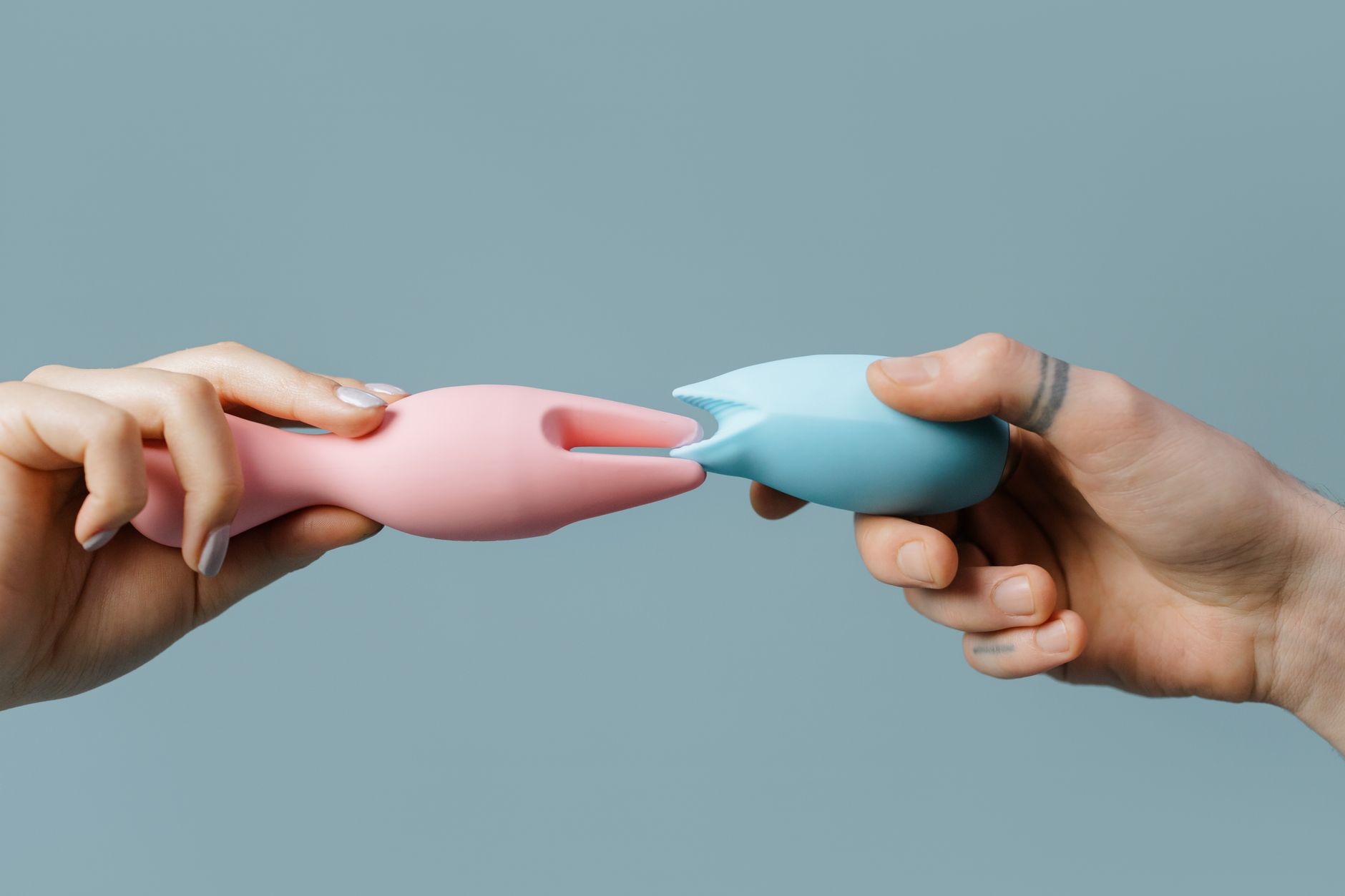
Traditional vibrators rely on you reaching a baseline arousal level first. Once you're there, intensity piles on. Lemon vibrators use suction and patterns that work more like a conversation with your body than a one-way signal.
The suction action of the lem vibrator mimics the clitoral stimulation that builds naturally, but accelerates it. Instead of waiting for blood flow to arrive on its own schedule, the suction draws blood into the tissue more efficiently. This matters enormously if your arousal curve has extended over time.
The patterns on a lemon vibrator also give you granular control. You're not choosing between "on" and "off." You're moving through escalating sensations that you can stay with for as long as you need. If it takes 20 minutes to build arousal at 45 instead of 5 minutes at 25, a lemon clitoral vibrator gives you the time and the texture to enjoy that slower climb.
Adjusting technique as sensation patterns shift
When clitoral sensitivity changes with age, the approach shifts in three ways.
Approach intensity gradually. Start at patterns 1 or 2 on the lem vibrator, even if you used higher intensities before. Tissue becomes more responsive to targeted stimulation, which means you might find depths of sensation at lower settings that you never noticed before. There's no speed record here. The point is discovery.
Extend warm-up time intentionally. Instead of treating the first 5-10 minutes as foreplay before the "real" thing, treat the entire session as the experience. Use lower patterns while you're building arousal. Notice when sensation shifts. Move patterns around your clitoris to find the sweet spots that light up as blood flow increases. This isn't patience. It's strategy.
Layer stimulation differently. As you age, simultaneous stimulation sometimes feels more intense than it did before. A lemon vibrator on your clitoris while touching your breasts or your inner thighs might create a chain reaction of sensation that feels deeper and more integrated than single-point stimulation alone.
What changes emotionally and relationally
Sensitivity isn't just physical. It's also emotional. If you've spent years feeling pressure to perform, to come quickly, to look a certain way during sex, those messages live in your body. Rewiring takes time.
One of the gifts of aging is permission. Permission to stop being someone else's fantasy. Permission to stop performing. Permission to explore your own pleasure for its own sake. When you use a lemon vibrator alone, you're practicing that permission. You're learning what your body actually wants instead of what you think it should want.
If you have a partner, naming the shift matters. "My arousal curve is different now, and I like it," is a powerful statement. It reframes aging not as loss but as evolution. A partner who gets this will become curious about your body's new landscape rather than anxious about it.
The science behind why some sensations intensify
Paradoxically, while some areas become less sensitive with age, others can become more so. The clitoral complex includes internal structures, the clitoral bulbs, that sit deeper in the pelvic tissue. As surface tissue becomes slightly less dense, stimulation that reaches those deeper structures sometimes registers as more intense.
This is why technique matters. A lemon vibrator positioned slightly differently than you used it at 30 might unlock sensations you've never felt before. The toy hasn't changed. Your body has. And your body now has things to teach you.
Many people also report that the psychological aspect of aging actually enhances pleasure. You know your body better. You know what you want. You're less distracted by self-consciousness. That mental clarity alone can amplify sensation in ways that no toy can replicate.
When to seek professional guidance
If sensitivity changes come with pain, numbness, or a dramatic shift in your ability to orgasm, check in with a healthcare provider. Conditions like genitourinary syndrome, peripheral neuropathy, or medication side effects are treatable. Getting clarity matters.
If you're in a relationship and sensitivity shifts are creating friction, a sex therapist can help you both understand what's happening physiologically and rebuild the conversation around pleasure. Aging isn't a problem. But misunderstanding it can become one.
If you're returning to solo exploration after years of not using toys, ease back in. Your body remembers more than you think. A lemon vibrator is an excellent tool for rediscovering sensation because it gives you feedback through multiple patterns and intensities. You don't have to guess what might work. You can explore methodically and feel what actually resonates.
Building confidence in your aging body
The most underrated shift that comes with age is confidence. You've survived things. You know what matters. You're not interested in bad sex anymore. You're not interested in partners who don't care about your pleasure. You're not interested in pretending.
That confidence is sexy. It's also practical. When you approach your body with curiosity rather than criticism, when you use tools like the lem vibrator as an invitation to discovery rather than a fix for something broken, pleasure happens.
Your clitoral sensitivity has changed. Your capacity for pleasure hasn't. Sometimes it's actually expanded. The question isn't whether your body is still capable of amazing sensation. The question is whether you're willing to learn how to access it in this new era of your life. A lemon clitoral vibrator is a smart companion for that work.
FAQ: Sensitivity changes and lemon vibrators
Why does my clitoris feel less responsive than it did 10 years ago?
Blood flow dynamics shift over time. The tissue around your clitoris becomes slightly less dense as collagen and elastin decrease. Hormonal changes affect how quickly arousal builds. None of this means your clitoris is broken. It means your nervous system is working with different operating conditions. A lemon vibrator helps by creating more efficient stimulation, so your body doesn't have to work as hard to reach arousal.
Is it normal for orgasms to feel different as I age?
Completely normal. Some people experience shallower orgasms. Others experience more localized sensation. And many experience intense, full-body orgasms that feel deeper and more integrated than anything they felt before. The shape of orgasm changes, but the capacity doesn't disappear. Using a lemon adult toy can help you explore what your orgasms feel like now rather than expecting them to match what they felt like at 25.
Can a lemon vibrator help if arousal takes much longer to build?
Yes. The suction action of a lemon clitoral vibrator efficiently draws blood into clitoral tissue, which accelerates the arousal process without requiring you to reach baseline stimulation first. Start at lower patterns and give yourself 20-30 minutes to explore. The extended timeline becomes part of the pleasure, not a problem to solve.
Should I use different lemon sexual toys at different life stages?
Not necessarily different toys, but different approaches. A lem vibrator works well across decades because it offers granular control. You might use it the same way at 35 as you do at 55, or you might adjust intensity and pattern timing as your body changes. The versatility is the point.
What if sensation feels numb in some areas but hypersensitive in others?
This mixed sensitivity is common and often improves with consistent use of a lemon clitoral vibrator. You're literally increasing blood flow and nerve activation in the area. Over time, sensation often normalizes. If numbness is severe or persists, check with a doctor to rule out other causes.
Does lower intensity at a higher age mean less pleasure?
Absolutely not. Many people find that lower-intensity lemon vibrators create more nuanced pleasure than the high-power toys they used before. Sensation becomes more textured, more interesting, more responsive to subtle shifts. Lower intensity doesn't mean less pleasure. It means a different kind of pleasure, often richer and more integrated.