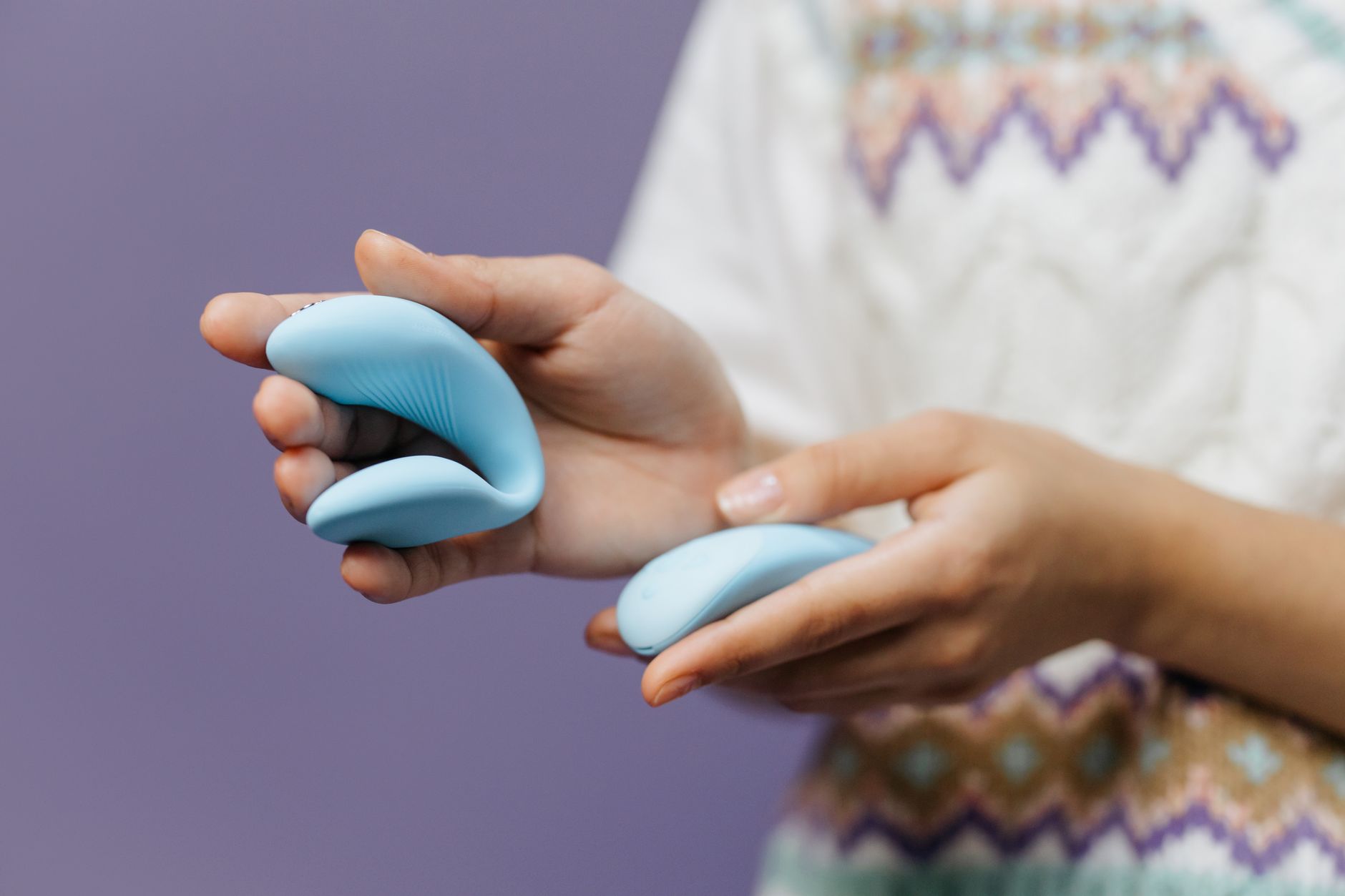
Here's the uncomfortable truth about stress and orgasms
Your orgasm doesn't live in your genitals. It lives in your nervous system. When cortisol—your stress hormone—is flooding your body, your nervous system is in sympathetic mode (fight, flight, freeze), which means it's actively working against the parasympathetic relaxation that orgasm requires. You can have the best lemon clitoral vibrator in your hand and still feel absolutely nothing because your brain is literally blocking the signal.
This isn't a libido problem. This isn't a you problem. It's a nervous system prioritization problem, and it's wildly common.
What stress actually does to your orgasm
Let's start with the mechanics. When you're under chronic or acute stress, your body releases cortisol and adrenaline. These hormones narrow your attention, increase heart rate, and make your muscles tense. Meanwhile, arousal requires the opposite state: dilated attention, slowed breathing, and relaxed muscles.
Specifically, stress affects pleasure in three ways.
First, sensation dampening. Cortisol reduces nitric oxide production in your genitals, which means blood vessels don't dilate as easily. Even with stimulation from a lemon sucker like the Lem, tissues take longer to become responsive. What normally feels electric can feel like a distant hum.
Second, mental intrusion. Your prefrontal cortex (the thinking brain) hijacks the show. Instead of being present with sensation, you're mentally replaying an argument with your boss or worrying about tomorrow's deadline. That's not a lack of desire. That's your threat detection system doing exactly what it was designed to do.
Third, pelvic floor tension. Stress lives in your muscles, especially your pelvic floor. When that area is held tight, sensations feel muted or even uncomfortable. A clitoral vibrator that usually feels amazing can start to feel irritating because the muscles around the area are already primed for tension.
Why the Lem (and other clitoral vibrators) still works
Here's the good news. Clitoral suction toys like a lemon vibrator actually have a mechanical advantage when stress is involved. Because suction creates a broader, gentler stimulation compared to direct vibration, it often feels less jarring to a nervous system that's already on high alert.
The sensation is more sustained pressure than sharp stimulus. This can actually help signal safety to your parasympathetic nervous system—the "rest and digest" branch—more effectively than other types of toys.
But and this is important you have to approach it differently when you're stressed.
Four ways to reset before using your lemon vibrator
The work happens before you touch the toy.
One: Breathwork first. Spend five to ten minutes on box breathing before anything else. Breathe in for four counts, hold for four, exhale for four, hold for four. Repeat. This directly signals your parasympathetic nervous system that you're safe. No breathing work, no pleasure. It's not optional when stress is high.
Two: Full-body release. Do ten minutes of something that moves stress out of your muscles. Shake your body like you're getting water off. Dance. Stretch slowly. Progressive muscle relaxation where you tense and release each muscle group. The goal is to literally discharge the held tension before you expect sensation to feel good.
Three: Lower your expectations. This sounds counterintuitive, but it works. If you go in thinking you need a powerful orgasm, you're adding pressure—which is the opposite of what your nervous system needs. Go in thinking, "I'm going to explore what feels okay right now." Intention shift changes everything.
Four: Create actual safety. Make sure you're somewhere you won't be interrupted. Phone on silent. Door locked. Familiar surroundings. Your nervous system won't relax into pleasure if any part of your brain is scanning for threat.
Using your lemon clitoral vibrator when stress is high
Once you've done the reset work, here's how to actually use the toy.
Start on the lowest setting. Stress makes sensation feel more intense, not less, even though pleasure feels muted. What feels gentle on a calm day can feel overwhelming on a stressed day. Pattern 1 on the Lem is your starting point.
Focus on external stimulation only. Don't add penetration or internal pressure. Your pelvic floor is already tense, and internal stimulation can trigger that tension further. Let the suction do the work on the clitoris and external tissues for as long as you need.
Notice what's happening in your body without trying to change it. Are your shoulders tense? Relax them. Is your jaw clenched? Release it. This isn't meditation, but it's in that neighborhood. You're observing, not forcing.
If pleasure isn't building after ten to fifteen minutes, stop. This is important. Your body is telling you something. Maybe stress is still too high, or maybe you need a different day. Using the lemon vibrator against your body's actual readiness creates frustration, which makes the nervous system even more guarded.
Some days, your job is just to practice the ritual of caring for yourself, not to achieve a specific outcome.
When to bring a partner into this
If you have a partner, involve them in the nervous system reset, not just the toy use. Ask them to create the physical safety (no interruptions, comfortable temperature, whatever helps you). You might ask them to be present but not directive—they're there to help you relax, not to make something happen.
Some people find that light touch from a partner—hands on their back, gentle massage—helps signal safety more effectively than being alone. Others find that a partner's presence, no matter how well-intentioned, adds pressure. Know yourself. Communicate what you actually need.
The longer conversation: stress and your baseline
If your orgasm intensity is consistently flat because stress is consistently high, the toy isn't your real problem. The stress is. A lemon vibrator can help you practice pleasure in the presence of stress, but it can't fix chronic stress for you.
That's the work of sleep, movement, therapy, boundaries, and often medication. All of those are worth exploring. You deserve pleasure that isn't dependent on having optimal conditions. But you also deserve to address the underlying stress, not just work around it.
When you reduce your baseline cortisol—through whatever combination of tools works for your life—you'll notice the Lem and other clitoral vibrators suddenly feel alive in a different way. That's your baseline nervous system state improving, not the toy improving.
How to tell the difference between stress-related flatness and other issues
Orgasm intensity varies for lots of reasons: medications, hormone fluctuations, pelvic floor tension, relationship dynamics, trauma history. Stress is just one of them. Here's how to check if stress is actually the culprit.
If your pleasure was good before a life event (job change, family crisis, relationship tension, health scare) and flatlined after, stress is probably involved. If the flatness appeared suddenly alongside high-stress circumstances and improves when you're on vacation or in a calm period, that's stress.
If the flatness is consistent regardless of stress level, or if it's accompanied by pain, numbness, or significant emotional distress, you might want to explore other causes with a healthcare provider. This is especially true if antidepressants are involved, since they can change sensation independently of stress.
One more thing: pleasure under pressure is still valid
This is a hard one. Our culture tells you that good sex requires optimal conditions: time, relaxation, desire, reciprocal enthusiasm. Most of us don't have optimal conditions most of the time. That doesn't mean pleasure isn't available to you.
Some of the most meaningful experiences people report with lemon vibrators and other clitoral vibrators happen in the spaces between crisis and calm. When you learn to access sensation despite stress, you're building a skill. You're learning that your pleasure isn't fragile. That it can coexist with a hard day. That you can practice self-care even when life is loud.
That's not settling. That's grown-up pleasure.
FAQ
Can I use a lemon vibrator if I'm having a panic attack?
No. A panic attack means your nervous system is in acute threat mode. Using a toy during that state can actually reinforce the panic because you're adding unfamiliar sensation to an already overwhelmed system. Get through the acute panic first with grounding (5-4-3-2-1 sensory technique) or breathwork, then revisit pleasure when your nervous system has settled.
Does the Lem vibrator work better than other clitoral vibrators when I'm stressed?
Clitoral suction toys like the Lem do often feel gentler to an activated nervous system than traditional vibrators because the sensation is broader and less sharp. But the toy matters less than the nervous system reset. A basic vibrator with good breathwork will outperform the best lemon clitoral vibrator without any reset work.
How long does it take for stress to stop affecting my orgasms?
That depends on the stress. Acute stress (a bad day at work) can resolve within hours with deliberate nervous system regulation. Chronic stress (ongoing relationship tension, ongoing health issues, ongoing financial strain) affects your baseline and can take weeks to months to reset once the stressor is actually removed. The toy work you're doing now is valuable regardless, but addressing the source is what creates lasting change.
Can medication help with stress-related orgasm issues?
Yes and no. Anti-anxiety medication can help you access the parasympathetic state that pleasure requires. But some anxiety medications and most antidepressants also affect sensation directly. If you're considering medication, ask your doctor specifically about sexual side effects and whether the benefits outweigh that cost for your situation.
What if my partner pressures me to use toys when I'm stressed?
That pressure is the problem, not the toy. Pleasure requires genuine consent and genuine readiness. If a partner is pushing you toward sexual activity (even with toys) when you're clearly stressed or unwilling, that's not a toy problem. That's a boundary problem in the relationship. You might want to talk that through, with a therapist if helpful.
Does breathing work really change what the lemon vibrator feels like?
Yes, actually. Parasympathetic activation (which breathing triggers) literally increases blood flow to genital tissue, increases lubrication, and heightens nerve sensitivity. The toy doesn't change, but your body's ability to receive sensation does. That's not placebo. That's neuroscience.
Your nervous system is the real story
A lemon vibrator is a tool. A really good tool, one that many people love. But the tool can only work as well as your nervous system allows. When stress is high, the work is internal first. Breathing, safety, release, permission. The toy comes after. Use it with that order in mind, and you'll find that pleasure—real, embodied, often surprising pleasure—is still available to you, even on the hard days.