Let's name what's actually happening
After birth or miscarriage, sex doesn't feel like sex anymore. Your body is unfamiliar to you. Your partner (if you have one) is suddenly also a parent, or is grieving alongside you. The thing that used to feel natural now requires a conversation, negotiations, apologies. Honestly? Most people don't even want to think about pleasure in those early weeks or months. And that's completely fair.
But here's what I see in my therapy room: there's a difference between "not ready yet" and "unsure how to come back." If you're reading this, you're probably in the second category. You want to feel yourself again. You want to remember what desire feels like. You're just not sure your body will cooperate.
I want to tell you something that might sound strange: this is actually the perfect moment to reintroduce pleasure using a tool designed specifically for sensitive, recovering tissue.
Why your body feels different (and that's not a bad thing)
Let's get the physiology clear.
After vaginal birth, the tissue is bruised, swollen, and stretched. Even if you had a straightforward delivery without tearing, the whole pelvic floor is working overtime to stabilize a body that's been through something significant. Cesarean birth skips vaginal trauma but adds abdominal surgery to the equation. Miscarriage, depending on how far along and whether you had a D&C, can involve similar tissue inflammation and hormonal whiplash.
Tissue sensitivity peaks around week two to week six postpartum. This is not weakness. This is healing. Your nervous system is in a heightened state, primed to protect you. It doesn't know the difference between protective sensitivity and pleasure-blocking sensitivity. Both feel sharp.
At the same time, estrogen is tanking. If you're breastfeeding, it stays low. This changes lubrication, elasticity, and how quickly you move from "nothing" to "ready." You might also be sleep-deprived, touched out by an infant, or carrying the weight of unprocessed grief. Your brain is not in a place where arousal comes naturally.
Here's the thing nobody tells you: none of this means your capacity for pleasure is gone. It's just reorganizing.
Why a lemon vibrator changes the equation
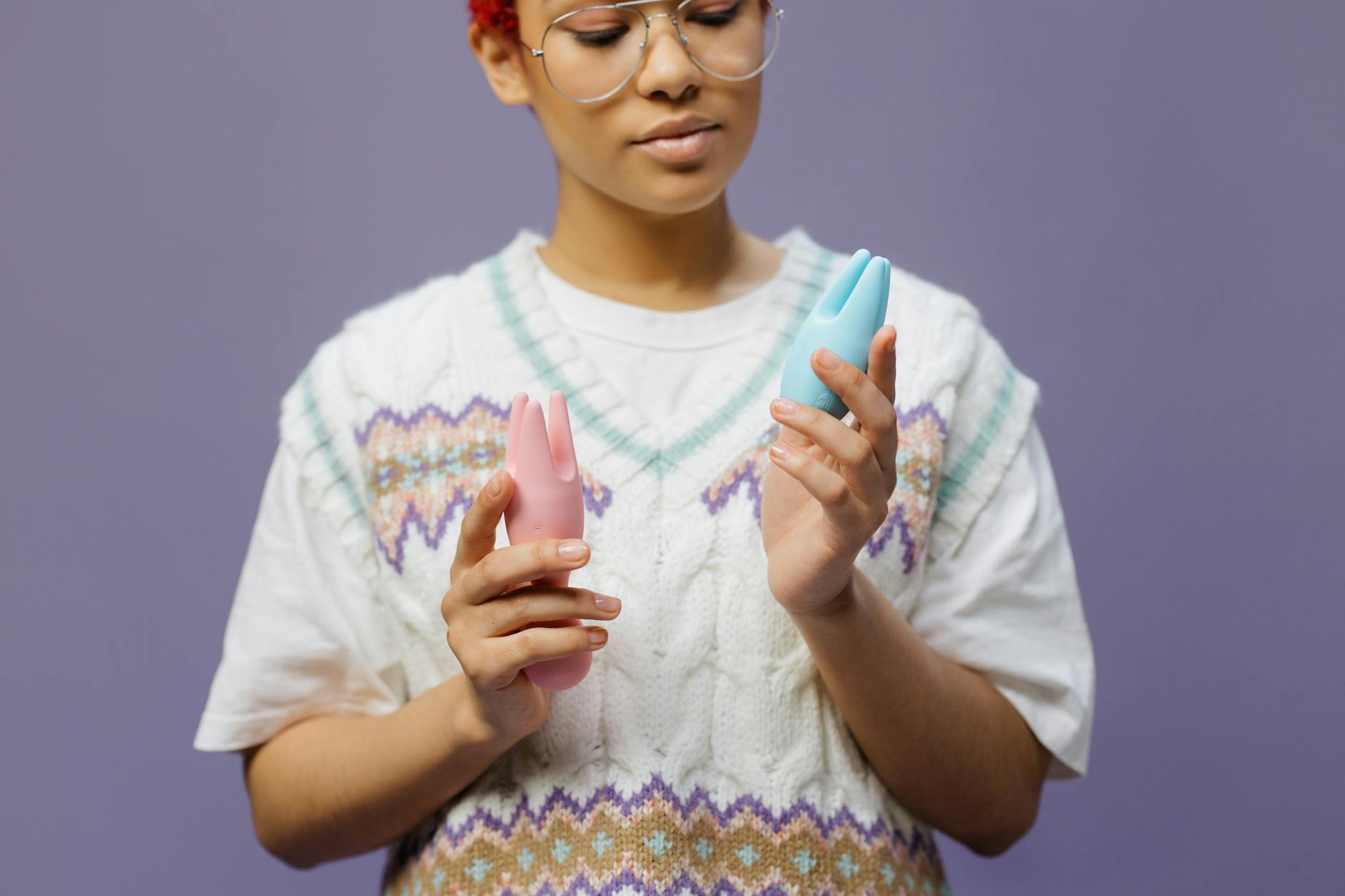
A lemon clitoral vibrator, like the ones Hello Nancy designs, works differently than traditional vibrators. Instead of buzzing against tissue (which can feel irritating when you're already sensitive), suction-based stimulation uses gentle air pulse waves. This matters for recovery because it engages nerve endings without friction.
Think of it like the difference between someone rubbing a sunburned shoulder and someone gently waving their hand above it. Same sensations involved, but one feels bearable and the other feels like punishment.
Why this works specifically for postpartum or post-loss bodies:
You control the intensity. Most lemon vibrators have multiple patterns. You're starting at level one or two, not ramping up because a partner is expecting you to. You set the pace. This matters more than you'd think when you're rebuilding trust in your own body.
No penetration required. Whether you had vaginal birth, a C-section, or a miscarriage, internal sensation can feel raw. Clitoral-only stimulation keeps things external, gentle, and entirely within your comfort zone.
Texture is forgiving. Medical-grade silicone is soft and won't aggravate healing tissue. If something starts to feel sharp, you stop immediately. Compare that to a partner's hand, which might apply pressure you're not sure how to redirect without awkwardness.
It feels like self-care, not "supposed to." This is psychological but crucial. Using a lemon vibrator alone feels like something you're doing for yourself, not something you owe anyone. That distinction rewires shame and obligation back toward ownership and pleasure.
The actual steps to take (medically and emotionally)
Don't start until your provider clears you.
This isn't me being cautious. Cleared usually means 6 weeks postpartum (longer if you had a C-section or significant tearing). After miscarriage, medical guidance varies by how far along you were and whether there was surgical intervention. Ask your OB directly. If they're uncomfortable with the question, find one who isn't.
Once cleared, here's what I recommend to clients:
Week one of reintroduction: just you, no penetration. Spend time alone (real alone, not just when your partner leaves the room). Use a warm washcloth to relax the external tissue for a minute or two first. This isn't foreplay. It's a nervous system reset. Then try a single pattern on your lemon vibrator at the lowest intensity. Thirty seconds. No goal. No orgasm expected. The only win is remembering what your own pleasure feels like when you're not performing for anyone.
Week two: add lubrication and patience. Water-based lube is your friend. Even if you're generating lubrication, the tissue is still more sensitive. Lube = less friction = less potential for aggravation. Same solo practice, but maybe longer. Maybe two or three sessions that week instead of one.
Week three and beyond: introduce this into partnered intimacy (if you have a partner and want to). Show them what you've been doing. Let them watch. This does three things: (1) it removes the pressure for them to "figure out" what you want, (2) it lets them see you as sexual and capable again, and (3) it gives you control over how and when anything else happens.
If you don't have a partner or aren't interested in involving one, just keep exploring. There's no deadline.
The emotional part (which is bigger than you think)
Your body did something extraordinary. Whether that was birth or whether you experienced loss, your body responded to a profound biological and psychological event. Shame about not being "back to normal" sexually is completely understandable and completely unnecessary.
Here's what I tell my clients in couples therapy: your partner doesn't need you to be instantly sexual again. They need you to be okay. And sometimes the fastest path to being okay is reclaiming pleasure on your own terms, with something that feels safe and non-negotiable.
Using a lemon vibrator solo also gives you information you can't get any other way. You'll discover which patterns feel best, which times of day your body is most responsive, how long recovery actually takes for you (not for the internet's version of you). This knowledge becomes a bridge back to partnered sex when you're ready, because you're not guessing anymore. You know.
If you're navigating this after miscarriage, there's an additional layer. Grief doesn't have an expiration date. Some days you're ready to explore pleasure. Other days the thought of your body in any sexual context feels like betrayal. Both are normal. A solo practice with a lemon sexual toy doesn't require you to "move on" or feel a certain way. It's just something available when you need it.
When to pause and reach out
If pain continues beyond week twelve postpartum, or if you're having sharp sensations that don't improve with gentler stimulation, tell your provider. Pelvic floor physical therapy is common, underused, and genuinely transformative. This isn't a failure. This is the medical equivalent of warming up correctly before a run.
If you're experiencing postpartum depression or post-loss grief that's overwhelming, sexuality is not the priority. Please talk to someone. The pleasure will wait. Your mental health won't.
And if you do decide to use a lemon clitoral vibrator during recovery and it doesn't feel right, that's data too. Some bodies prefer a different approach. There's no shame in trying and deciding it's not for you.
You're not supposed to be "back to normal"
Here's the thing about recovery: you're not returning to the person you were before. You're becoming someone new. That person can access pleasure again, differently. That person might want sex on a different schedule, in different ways, with different boundaries. That person might surprise you.
Using a lemon vibrator during recovery isn't about rushing back to your pre-loss or pre-birth self. It's about meeting yourself where you actually are and discovering what feels good from this new vantage point. Sometimes that's gentler. Sometimes it's more intense. Always, it's yours.
When you're ready to explore, Hello Nancy's lemon vibrators are designed for exactly this kind of sensitive reintroduction. But the real tool is you deciding that your pleasure matters enough to tend to it carefully. Everything else is just permission.
Questions people actually ask
Can I use a lemon vibrator if I'm still bleeding or spotting? Not yet. Wait until bleeding has stopped and your provider has cleared you. Spotting can indicate the cervix is still healing.
My partner feels rejected when I want to use a vibrator alone instead of being intimate together. This is a conversation worth having now, not later. Explain that this is about rebuilding your relationship with your own body, not about them being insufficient. If the conversation stays stuck, couples therapy can help you both understand what's underneath the rejection.
I'm terrified I've lost my sex drive forever. You probably haven't. But postpartum sexual desire can take months or years to fully return, especially if you're breastfeeding or exhausted. A lemon vibrator isn't a cure for low desire. It's a way to stay connected to pleasure while your hormones and nervous system reset.
Is it normal that even gentle stimulation feels painful? Not comfortable-painful, but actually sharp or stinging pain is worth mentioning to your provider. Sometimes a small infection or delayed healing can cause this. Rule out the medical stuff first.
When can I involve a partner? When you're ready. That might be week three or week twelve. There's no single timeline. If your partner is ready before you are, that's okay. You're not on their timeline. You're on yours.
What if using a vibrator makes me feel more disconnected from my partner? Some people find the opposite is true. When you've rebuilt your own pleasure, partnered sex becomes something you're choosing to do, not something you're performing. That often deepens connection. But every couple is different. Check in with each other.
Can I get pregnant right after using a vibrator, even if I'm not having penetrative sex? Pregnancy requires sperm to reach an egg. External clitoral stimulation with a lemon vibrator doesn't create a pathway for that. You're protected. But if pregnancy is a concern, talk to your provider about when it's safe to resume any sexual activity.
I had a miscarriage and everyone expects me to "move on." You don't have to. Grief and pleasure can coexist in messy, non-linear ways. Using a lemon vibrator doesn't mean you're over it. It means you're taking care of yourself right now.
Moving forward
Your body did something. Birth or loss or both. It's supposed to feel different. That's not damage. That's change. And somewhere inside that change, pleasure is waiting for you to find it again on your own terms, in your own time, with tools designed to meet you where you actually are.
When you're ready to explore, you'll know. And when you are, you don't have to do it alone. You have Hello Nancy, you have this information, and most importantly, you have yourself. That's more than enough.
If you're navigating complex emotions around postpartum or post-loss sexuality, talking to a therapist trained in this area can make a real difference. Reach out here if you want resources or recommendations.